There were many reasons why leaving became inevitable, with family foremost among them. Yet family and love alone do not fully explain the decision. Those considerations might have led to a different arrangement, without requiring me to leave a place I had called home for fourteen years. The cultural environment that was supposed to nourish creative work had become increasingly unwilling to examine its own assumptions.
One day in 2019, on the ITP board, the discussion regarding the protests was overwhelmingly lopsided, reflecting the typical liberal position. By that point, …
exhibition review — first published in Chinese in Artforum展评 · Artforum 中文网
First published in Chinese in Artforum (artforum.com.cn), August 19, 2026. The English translation follows; for the Chinese version, see the original page.
中文原文刊于 Artforum 中文网(2026 年 8 月 19 日),请见原文页面。
Beijing
In Other Moonlights 月下兼差
tbc projects 临时计划
Mudan Innovation Technology Incubator, Jiuxianqiao, Chaoyang District
June 27–August 30, 2026
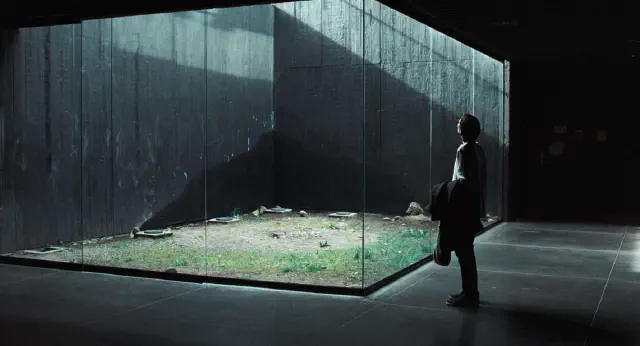
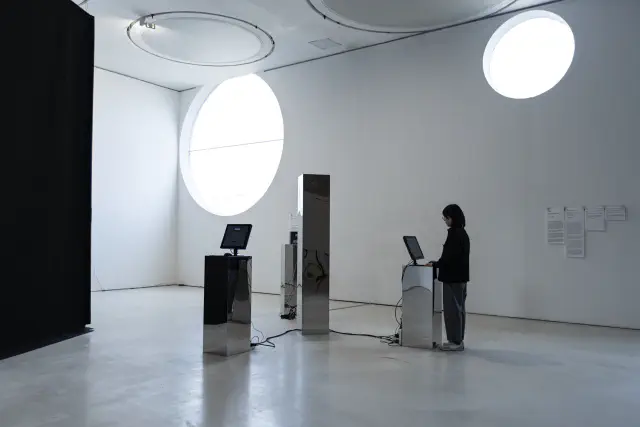
The office park that houses the Mudan Innovation Technology Incubator sits somewhat off the beaten track and keeps the look common to industrial parks of the early 2000s: blocky gray-white buildings fitted with faintly bluish glass, …
published in Counterstructural Commons as a chapter (Rhizome)作为章节刊于 Counterstructural Commons(Rhizome)
Published in Counterstructural Commons as a chapter (Rhizome), May 2026.
Part I. The Library Imagine a dark, massive library where the books are glued to the shelves. The library has a mechanical track on the floor, and a robot arm fixed onto it. Visitors walk in with a flashlight which they can use to retrieve the books. They shine the light on a shelf labeled with the topic of their interest. Say, when light hits the “Double” shelf, a robot arm automatically “grabs” the book for you. But because the books are glued to the shelves. Instead of grabbing the original copy the …
So many talks in designing for “friction” — against the smooth-and-all-available design ethos — also as a response to the void of negativity in design thinking (not that design thinking). Yet the framing, like the framing of degrowth, shares the same issue — or rather, the framing isn’t wrong so much as it looks at the wrong layer. And it is this misplaced focus that causes the friction-design method to confuse itself — what is the difference between a good friction and a bad friction? Where does good friction stop and pure obstaclism start? The design-for-friction …
This manuscript was transcribed by a large language model from a lecture of the same title delivered at Duke Kunshan University on September 29, 2025. A closely related version was presented at Hong Kong Baptist University on September 24, 2025. I gratefully acknowledge the invitations from Prof. Ziv Ze’ev Cohen and Prof. Rui Hu (Duke Kunshan University) and from Prof. Kachi Chan (Hong Kong Baptist University).
The title is “Software as Worlding Infrastructure.” Before I start, I want to spend a bit of time explaining what the title even means. I think “software” and …
on memory, time, and a habitable new world — published in Beijing Literary Criticism记忆、时间,与一个可栖居的新世界 ·《北京文艺评论》
In recent years, among the work of artist friends around me, “memory” and “time” have appeared alongside AI, databases, and futurism with increasing frequency. A few years ago, I accompanied several friends to Lincoln Center to see Memoria by the Thai director Apichatpong Weerasethakul. The camera drifted slowly through the damp rainforests of South America; through the protagonist’s somnambulant gait, time itself drifted in nonlinear ways. Though these works were made in recent years, what they presented was a weary old world, carrying the texture of a dream occurring …
hypertext narrative, installation, and performance超文本叙事、装置与表演
2025–2026 · Hypertext narrative, installation, and performance
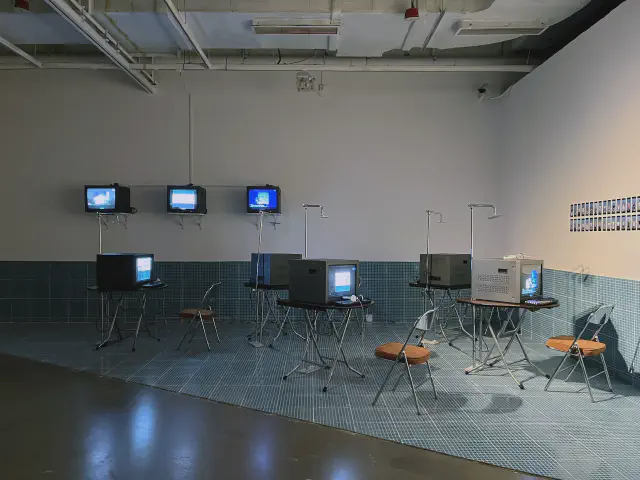
Installation view, Times Museum, Guangzhou, March 2025. Photograph: Pengjing (彭婧).
A hypertext narrative with shared memory Mountain of Many Voices (MoMV) takes the form of a hypertext narrative, encountered through installations and performances. Players return to a childhood home altered by urbanization, then ascend a mountain where personal recollections mingle with memories that have no single narrator. Choices made along the way are retained and can return within later passages, shaping the world …
Many of our past works critique the dominant schemes of designing and developing computing systems, as we hold the view that computing systems are increasingly becoming the mediating layer between us and reality. As a result, the most important design challenge in our age is the reexamination of our computing systems, as any societal change cannot be complete without it. Hubert Dreyfus (1929-2017, American philosopher) pointed out that one must look into the ontological, epistemological, and psychological assumptions of computation and question their limits and legitimacy. …
Computing systems, often seen as objects rather than what they really are in essence—a collective of logic—are increasingly becoming the mediating layer between us and the real, yet they are becoming more and more homogenized, controlling, and gradually transforming the multidimensional future into a one-dimensional racetrack. As a result, the most important design challenge in our age is the reexamination of our computing systems, as any societal change cannot be complete without it.
The algorithmic sphere today, the global network, is largely constituted by software that …
It is almost taken for granted that China has “entered modernity,” given its advanced technology and industrialization. Yet if we define modernity not simply as a material condition, but as certain attitudes — Gestell, commodification, the subject-object ideal — arising from a particular Weltanschauung, then what China is in is not modernity in the Western sense.
China is a calque of modernity. The image plays in sync, but the audio track is from a different film. The grammar that received the borrowing is older, and it rewrites what it absorbs. What we have is a …
Digital Video, English and Mandarin, 2022
“Out of Sight,” a digital video created by zzyw, showcases the duo’s latest installment in their “Rule-making as Worldmaking” series. Through the use of a “desktop cinema” format, the video explores zzyw’s research on rulemaking in simulated computational environments, specifically drawing upon their collective work on ThingThingThing from 2019 to 2021. This video not only provides insight into zzyw’s thought-provoking research, but also offers a glimpse into the engineering efforts behind the creation of ThingThingThing.
目所不见(Out …
Podcast: Cacotopia, Macalline Art Center播客:恶托邦,美凯龙艺术中心
About the podcast
“卡壳”(Cacotopia)是一个收集不同声音的播客项目,专注于那些在日常生活中容易被忽略的声音。“卡壳”每期邀请1~2位艺术家、学者、研究者作为嘉宾,与我们共同分享他们跨学科的创作、文本和思考。
Apple Podcast
New York-based artist duo zzyw (Qi Zhenzhen and …
Thing making workshop with New Museum-Rhizome与新美术馆-Rhizome共同举办的物件制作工作坊
The workshop, hosted by New York-based art and research duo ZZYW, focuses on the concepts of systems theory and its application to various computational, social, and biological phenomena. Participants are guided through examples of different systems, including the human body, Tulip Mania, and the Exquisite Corpse game. Following this, they engage in a collective drawing exercise to design their own algorithmic entities or ‘Things.’ These ‘Things’ are then injected into a shared virtual world, creating a live, accessible simulation that forms part of the ongoing “World on a …
2023–2024
Other Spring (OS) is a theory-fiction worldbuilding project.
Film still: UNO
Film still: UNO’s observational center
Film still: OS village
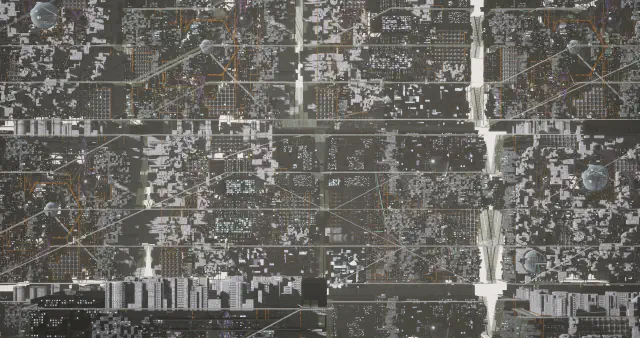
A village within an observing network Other Spring (OS) is a speculative worldbuilding project presented as a docufiction. The OS world is designed through its technical infrastructure and architecture, then documented in film.
The project grew out of the research series Computational Haze and draws on the ancient tale of “The Peach Blossom Spring,” in which a secluded village remains sheltered from the surrounding world’s …
School of Fine Art, Cooper Union, New York库柏联盟美术学院,纽约
This computational studio course immerses students in the fundamentals of simulated worldbuilding, covering both technical implementation and critical theoretical contexts. Using tools like Unity, Blender, and coding, students learn systems design, modeling, animation, interactivity, and critical approaches for realizing virtual environments and experiences. Assignments progress from conceptual experiments to hands-on creation of behaviors, forces, and narratives through 3D assets, shaders, and other computational methods. Readings ground technical tutorials in relevant …
2017–2021
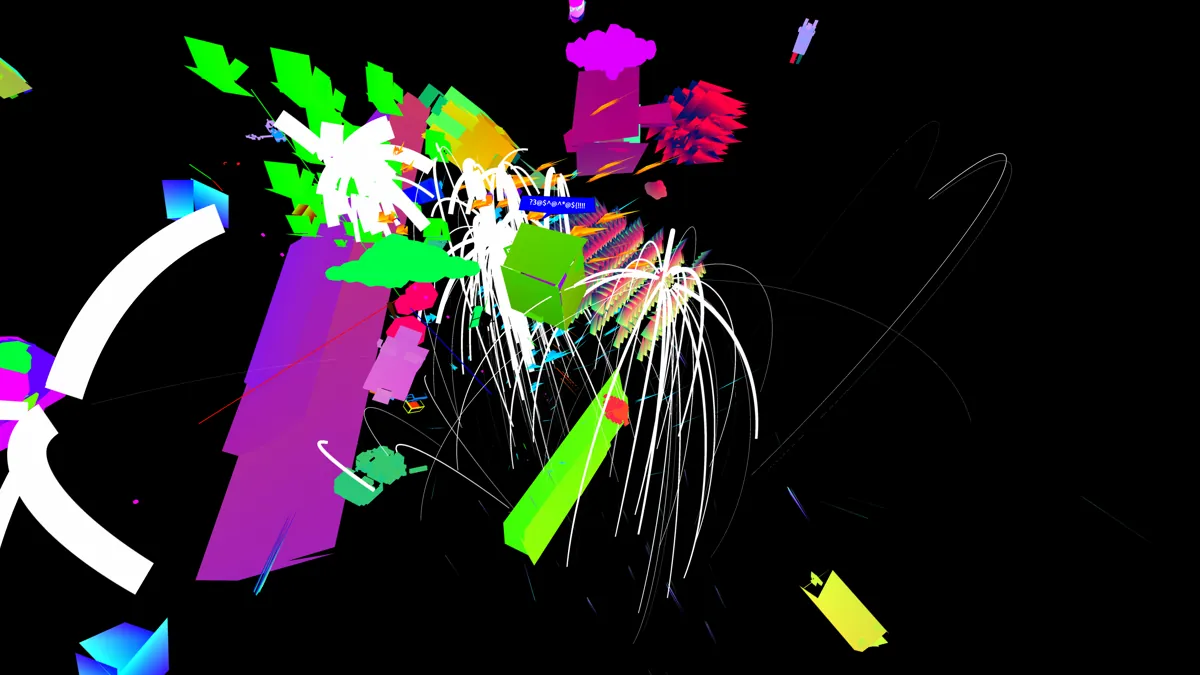
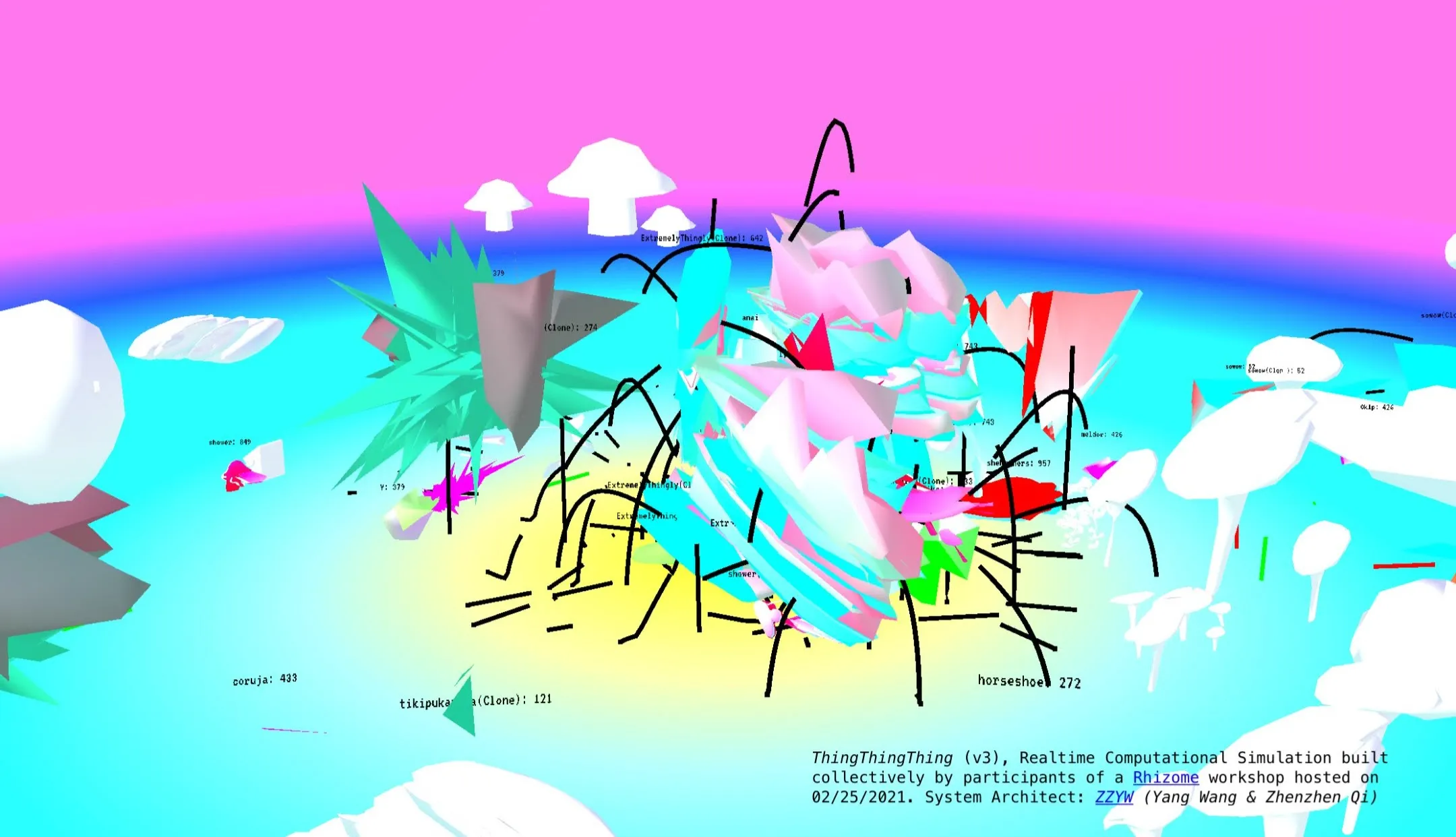
A shared world of programmed entities ThingThingThing is a computational environment that facilitates the creation and interaction of digital entities. Developed through collaborative workshops and/or online participation, it allows participants to define entities within certain parameters. Once introduced into the system, these entities exist and interact autonomously, evolving without further direct human intervention.
The visual design of ThingThingThing is characterized by its abstract, geometric aesthetic. The creatures and the environment they inhabit are …
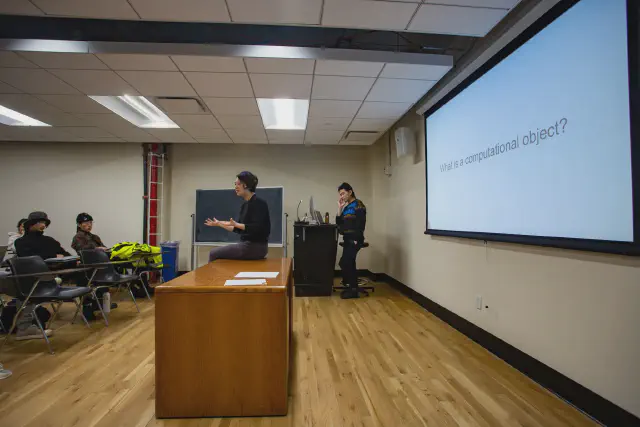
What is a Computational Object? Reimagining Object Interaction: Exploring the Boundaries of Physical and Computational Realities with ThingThingThing
This presentation offered an exploration of the nature of objects, both physical and digital, and how they can be altered through interactions. It sought to redefine the way we perceive objects and their implications in our world, extending beyond traditional human-centered perspectives. The talk dove into the topic of computational objects, presenting them as a unique blend of variables, functions, and properties tied to …
Workshop at Asia Art Archive in America亚洲艺术档案美国中心工作坊
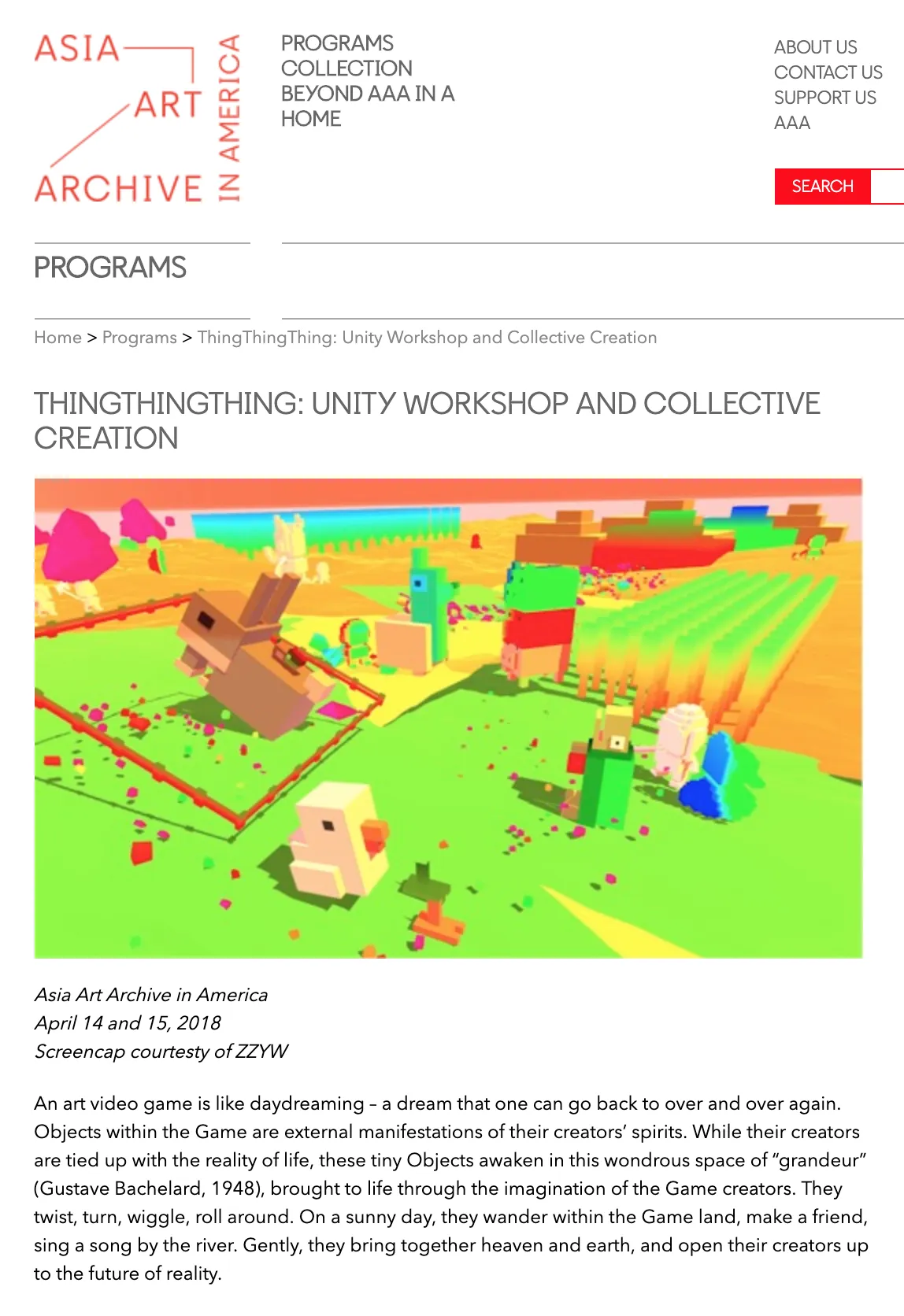
ThingThingThing workshop held at Asia Art Archive in America at Asia Art Archive in America
An art video game is like daydreaming – a dream that one can go back to over and over again. Objects within the Game are external manifestations of their creators’ spirits. While their creators are tied up with the reality of life, these tiny Objects awaken in this wondrous space of “grandeur” (Gustave Bachelard, 1948), brought to life through the imagination of the Game creators. They twist, turn, wiggle, roll around. On a sunny day, they wander within the Game land, make a friend, …
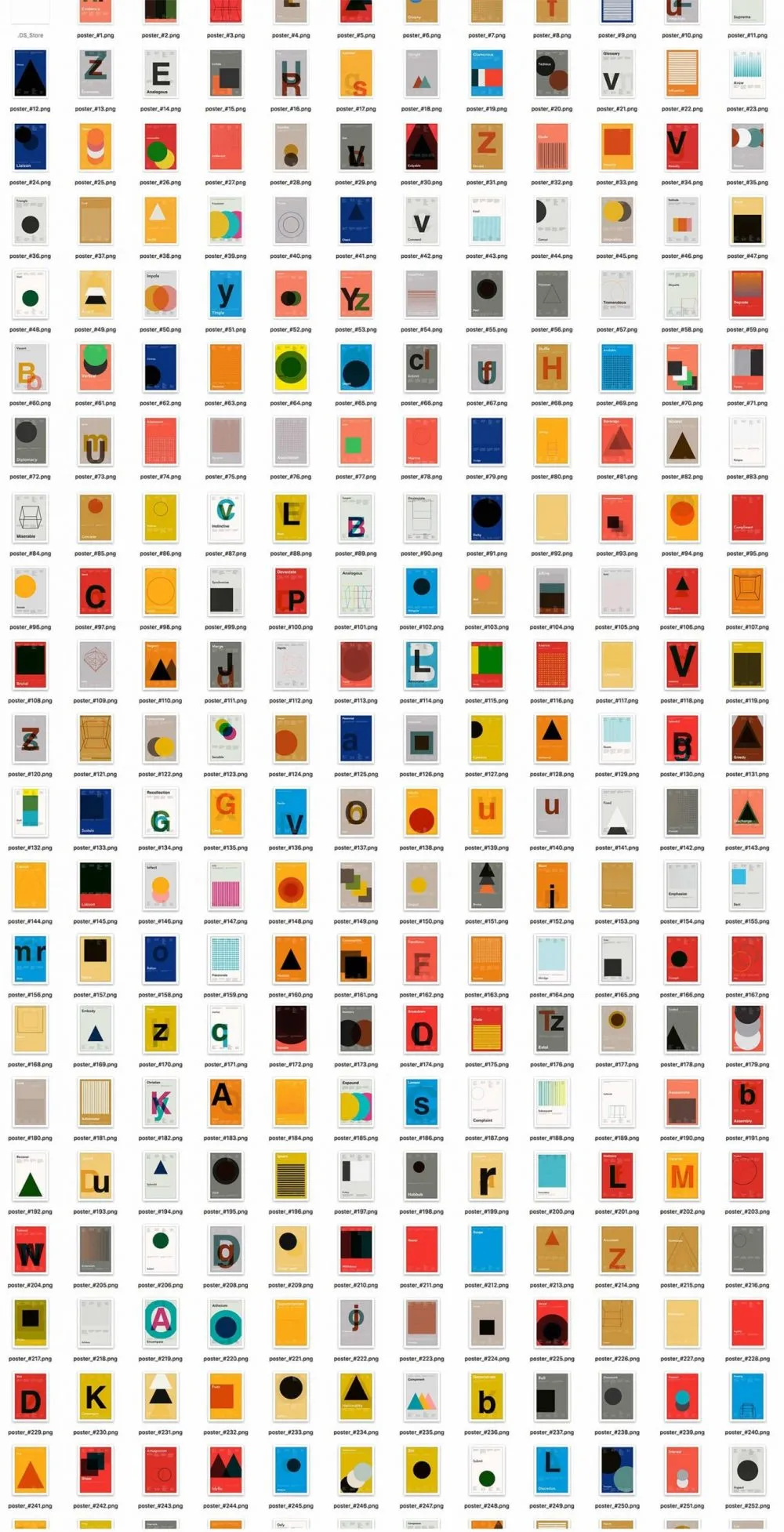
LENNA is a computing system that produces graphic design on its own. The system consists of multiple software and hardware components, including a custom-written computer algorithm running on a modern computer, a connected plot printer, and a monitor displaying the design process.
The system is programmed to create graphic designs that follow the visual principles of the most popular International Typographic Style, often referred to as Swiss Style. This design style was developed in the 1920s in Europe and later widely adopted by American designers. Since then, it has …