The Mainland Register
Note: The English version is the directly written original; the Chinese version is an LLM-assisted translation. 说明:英文版是直接写作的原文;中文版为 LLM 辅助翻译。
English
It has been more than a decade since I last threw myself into an exhibition on the mainland. Maybe that was too long. Returning to 798 for a white-cube exhibition, I found myself remembering the person I was when I first moved to New York: the first projects I made there, during those first few years, before I shifted into a register more legible to the New York art field. That shift was partly forced and partly a genuine change of interest. Yet the earlier register has always felt more authentic to me. Because it was so difficult to translate in New York, I let it go dormant.
The person making work before 2015 or 2016 was still deeply entangled with China. Encountering that older frequency again, in person, felt strange, as in the familiar story of someone who has lived for years in another culture and then returns home with foreign eyes.
The exhibition that set this off is Kairos Resounding, curated by Zhang Ga, a two-person show by Julian Charrière and Laurent Grasso at 798CUBE. The artists are French-Swiss and French, yet the show appears in a Chinese institutional space, under the care of a Chinese curator, and within a Chinese contemporary-art context. Something about that placement made a certain register audible again: a slower sense of time; a sound that tends toward the ambient and the ethereal; a subject that often appears vast, impersonal, and difficult to name.
I have felt this quality in works by friends and acquaintances I have been lucky to know: He Zike’s videos and Cheng Xinhao’s documentary-like photographs and films. Among more established figures, I feel it in Cao Fei too. In each case, something strange or abnormal enters the work, while the tone remains suspended, meandering, and oddly calm. I have also sensed it in work by Chinese artists I have encountered in New York, including He Huiqi’s video pieces on clouds and haze and Yasmine Anlan Huang’s video work, which appeared in the 2024 Whitney Biennial. To call these artists simply immigrants would flatten how they preserve, or keep revisiting, something like a root. The word is troublesome, but no easier one comes to hand.
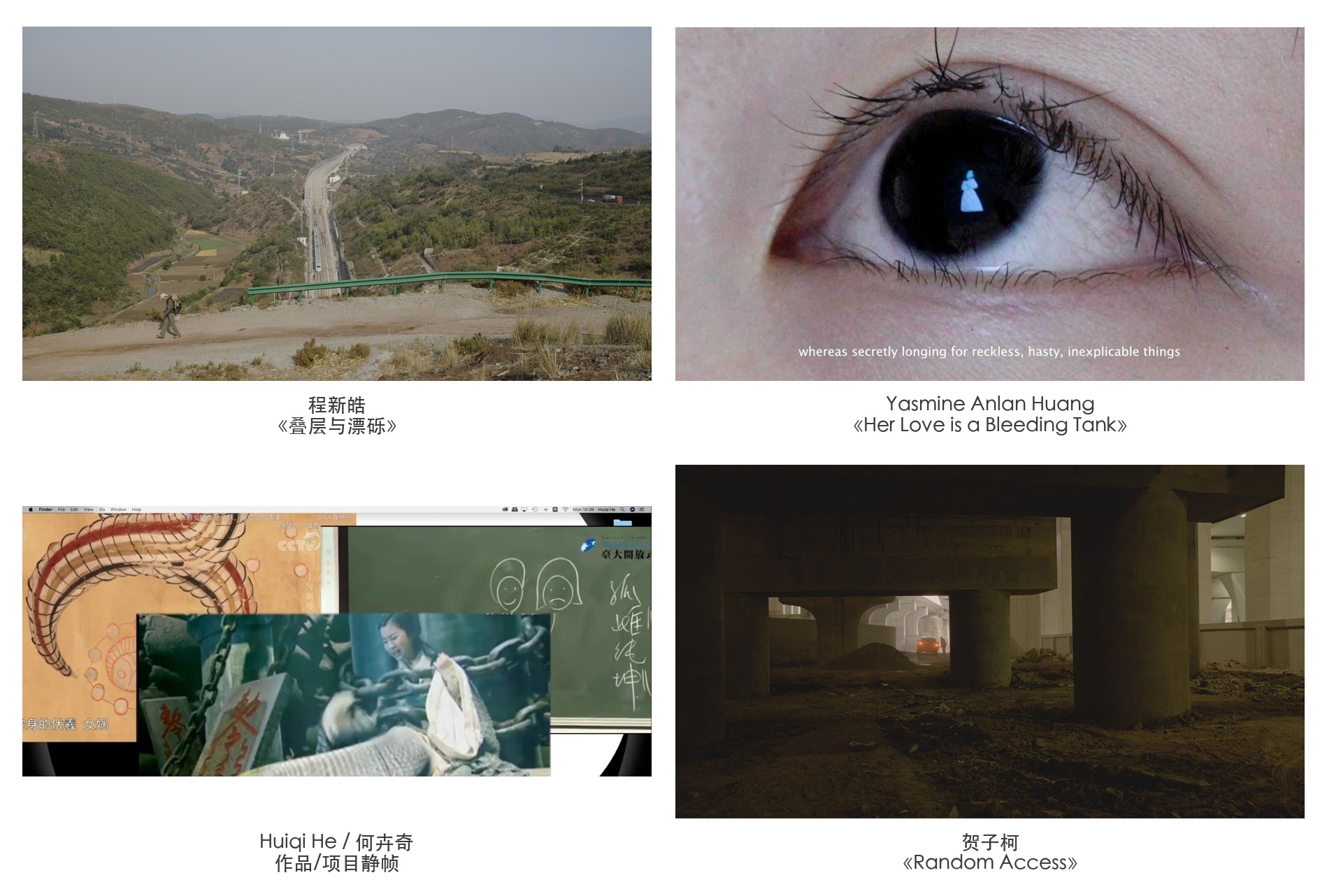
图 2 / Fig. 2. 左上 / top left: 程新皓《叠层与漂砾》; 右上 / top right: Yasmine Anlan Huang, Her Love is a Bleeding Tank; 左下 / bottom left: Huiqi He / 何卉奇作品/项目静帧; 右下 / bottom right: 贺子珂《Random Access》。图源 / Sources: artist website, Whitney Museum, Kontekst Collective, 2025 Taipei Biennial.
Here I must say that I am less interested in talking about “contemporary art,” or about “art” as “someone else’s profession.” Once the frame is set that way, 99 percent of people already feel excluded. Art, ultimately, is about crafted artifacts, about made things. Making is something everyone does. What concerns me is the atmosphere of contemporary China: a certain attitude, a way of seeing the world and seeing existence. Art is the entry point for that analysis. Any such analysis has to begin with behavior or with artifacts. If we begin with behavior, it becomes hard to avoid the filter of datafication. Artifacts, the things made, offer a better heuristic.
What is this mainland melancholy register?
So the question is this: what is this mainland melancholy register? What becomes visible in the gap between it and the register I learned to use in New York? Rather than trying to define what Chinese contemporary art essentially is, which would return us to the oldest mistake, I want to ask how a sensibility forms: what kind of attention it trains, what histories it carries, and what kind of subject it allows an artwork to address.
The wall text for Kairos Resounding invokes kairos, the Greek notion of a decisive moment, alongside Walter Benjamin’s Jetztzeit and Giorgio Agamben’s messianic time. It describes a temporality under pressure from climate crisis, accelerated computation, premodern cosmology, and more-than-human agencies. The language is grand. Its scale is civilizational. It asks the viewer to think through glaciers, atmospheres, data, cosmic time, and planetary change.
This is telling. The subject is large, and the exhibition chooses to speak at that scale. In Charrière’s work, time often becomes geological, glacial, or mineral. In Grasso’s, perception is suspended between scientific instrument, occult apparatus, historical painting, and speculative fiction. The scale is large: deep time, altered knowledge, planetary anxiety, and the human being as a minor pressure inside larger systems.
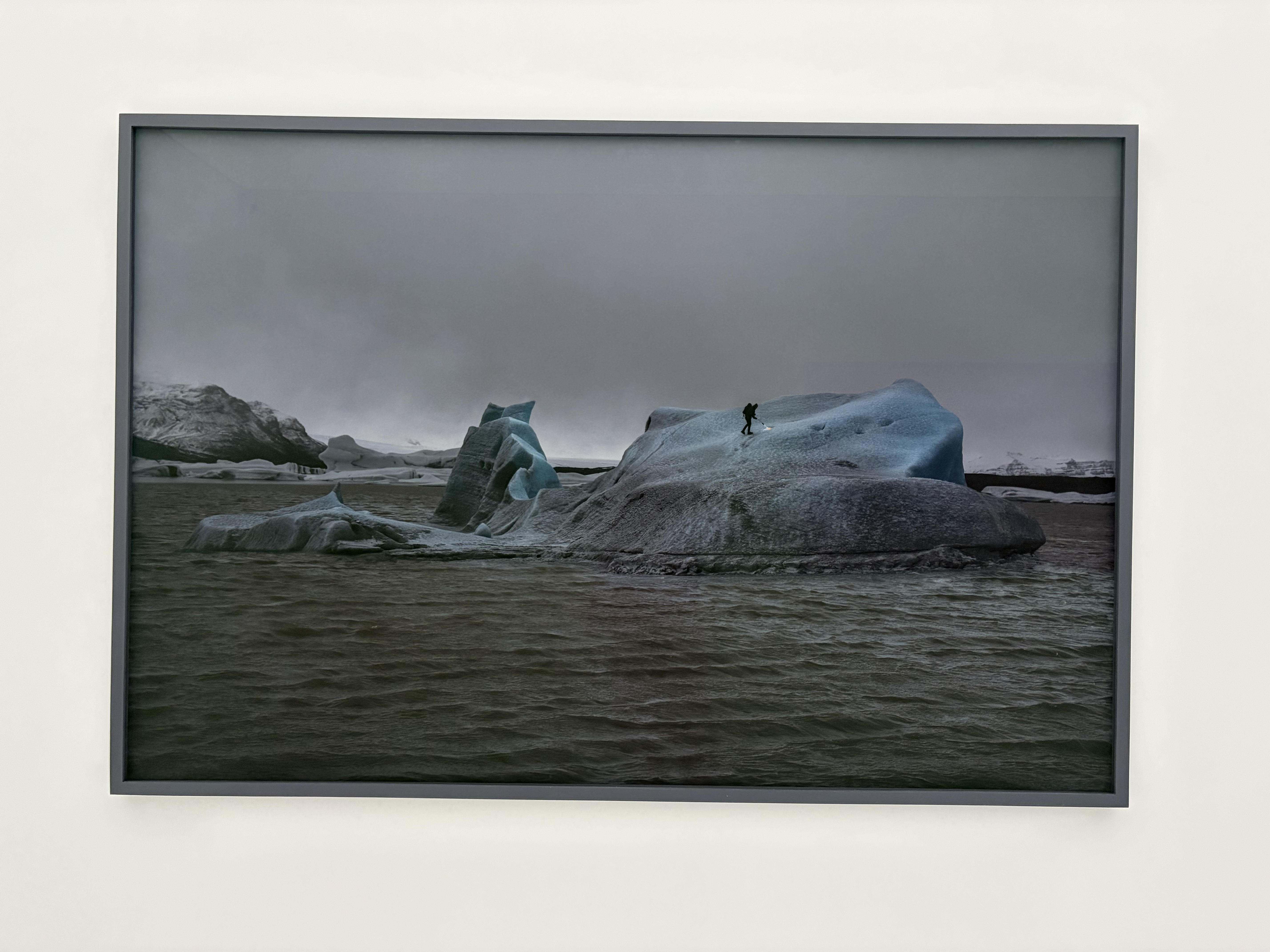
图 3 / Fig. 3. Julian Charrière, The Blue Fossil Entropic Stories I, 2013. 798CUBE 展览现场/文献图,2026 年 6 月。Installation/documentation view at 798CUBE, June 2026. Photo: the author.
I lack the expertise and authority to say what Chinese contemporary art is, especially in contrast to New York’s. I am not even sure whether it is possible to speak coherently of “New York art.” Still, one can gesture toward a certain kind of art here, especially when seen against the work of many Chinese artists. Every scene is diverse, and every scene wants to be described as diverse. Even so, each has a privileged voice and a privileged subject. New York has one. Beijing has one. Berlin and London have theirs too.
Mainland contemporary art often concerns the civilizational and the epochal. These are subjects, but they are also aesthetic registers.
My provisional sense is that mainland contemporary art often concerns the civilizational and the epochal. These are subjects, but they are also aesthetic registers. They may say as much about the society around the work as about the work itself. The question is why art here so often turns toward that scale.
It would be wrong to say that mainland culture is uniquely preoccupied with big questions. Americans are also obsessed with history, catastrophe, technology, nature, and the future. The difference lies in how those concerns are addressed and expressed, and in the relations around them: artists, curators, audiences, publics, institutions, habits of speech. Setting aside highly specific regional matters such as race or sexuality in the West, the same pressures are felt everywhere. They are braided differently.
So far, I may not have answered the question I set for myself. What I am trying to say is that there is a different direction of attention here. It appears at nearly every point in the production process. It appears in conceptualization: What is the concern? Why does it matter? Which part of it becomes thinkable? It appears again in artistic formulation: What attitude is appropriate? What kind of response counts as meaningful? What forms of intensity are trusted?
The point of view often does not belong to a particular individual, and the work does not always move toward an individual viewer as its final destination.
In the mainland register, the point of view often does not belong to a particular individual, and the work does not always move toward an individual viewer as its final destination. Yet it would be too cheap to say that American art, or New York art, is merely individualist. Land art in the American Southwest, including Michael Heizer’s work, has its own version of the small-and-gigantic: slow, nonhuman, and concerned with time beyond the scale of the body. By “nonhuman,” I mean the human pushed deep into one phenomenon among others, far from the fantasy of transcending the body through technology.
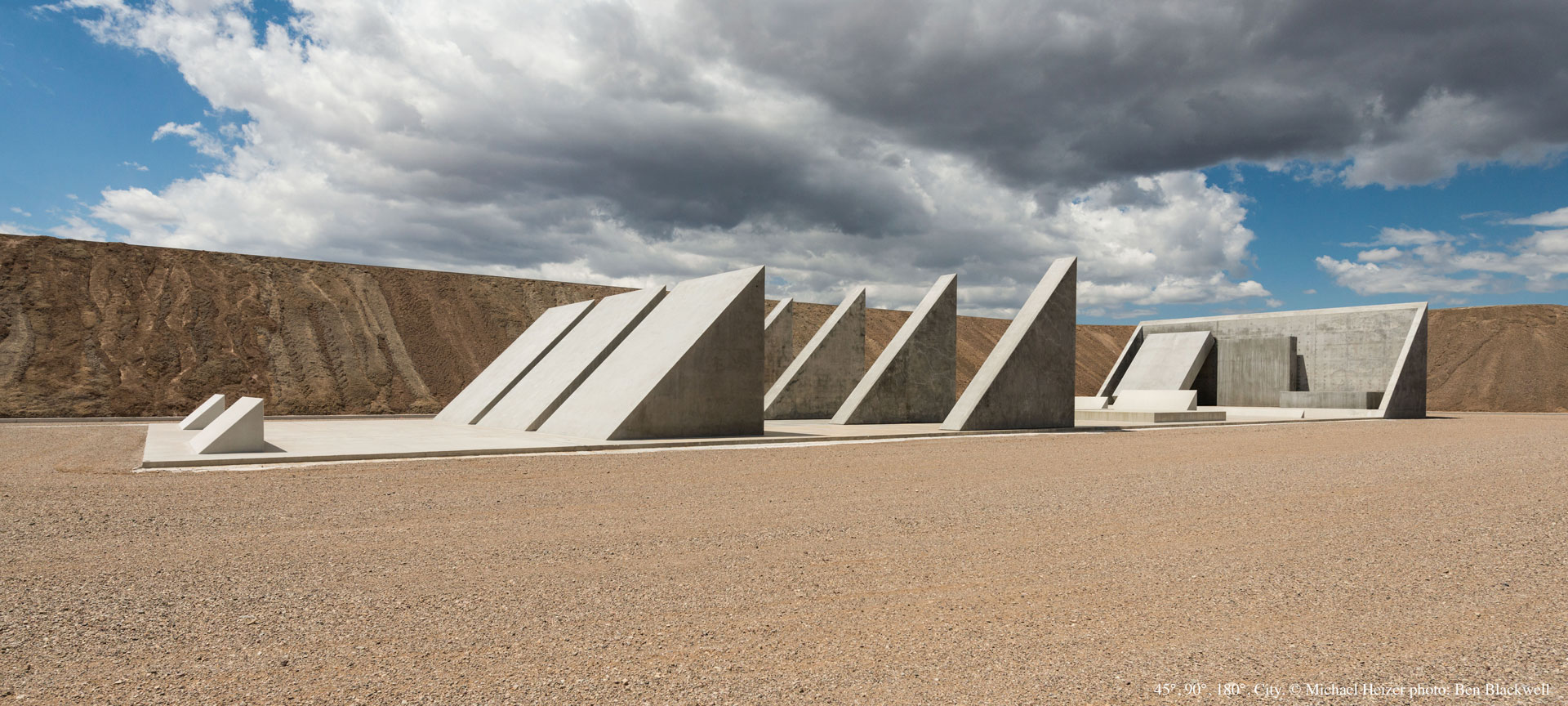
图 5 / Fig. 5. Michael Heizer, City, 1970-2022. 图源 / Source: Triple Aught Foundation.
An art that seems to have time to sit with the world, to watch it at nap time, when everyone else has fallen asleep.
The mainland register becomes especially pronounced here. Even within a single artist’s practice, the texture of presentation can change drastically from context to context. Watching documentary footage of one artist’s work in Dallas, then encountering the same general terrain in Beijing, I could feel the difference: one version highly animated and electric, the other somber and slow. This returns us to the quality I am trying to describe: an art that seems to have time to sit with the world, to watch it at nap time, when everyone else has fallen asleep. That sound of existence is tangible everywhere. As an aside, it may be one reason phenomenology has become so compelling in China, beyond the political and incidental explanations.
It would also be too easy to say that, because direct political confrontation is constrained in China, only this ambient voice remains. If that were the whole story, confrontation would simply reappear in another shape. It does, in fact. One could think of Ge Yulu’s work here. Yet it would be reductive, even offensive, to treat Ge Yulu’s practice as political activism under censorship. The mainland register is present in his work too, as it is in early Ai Weiwei’s so-called political art. The issue is less whether conflict exists than how conflict becomes sensible.
It would be reductive, even offensive, to treat Ge Yulu’s practice as political activism under censorship.
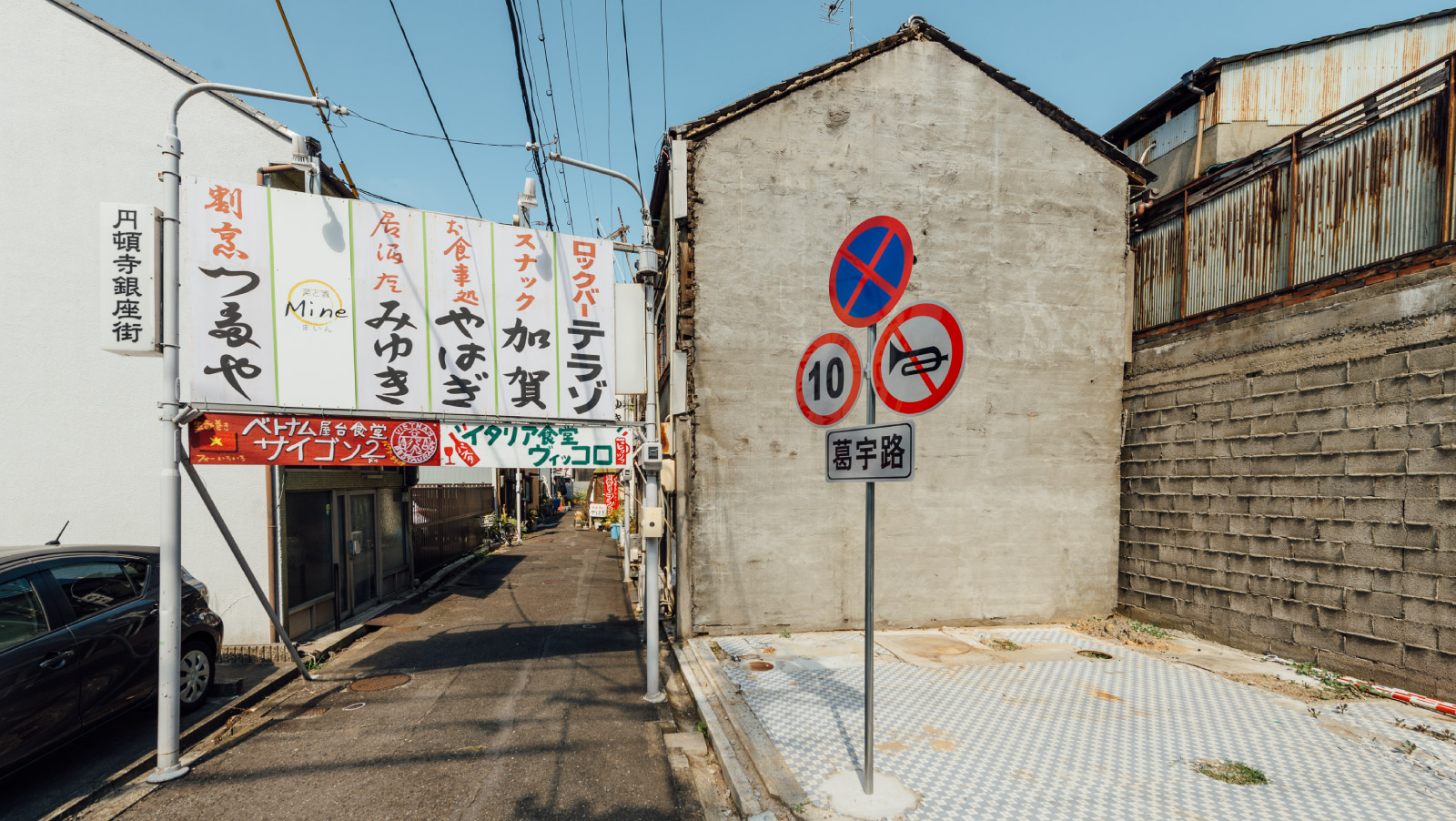
图 4 / Fig. 4. 葛宇路,GE YU LU, 2017。2019 爱知三年展展览现场。Installation view, Aichi Triennale 2019. Photo: Takeshi Hirabayashi. Source: Aichi Triennale.
What produces art that is heavy, slow, ethereal, and nonhuman?
What produces art that is heavy, slow, ethereal, and nonhuman? How does it differ from art that is electric, confrontational, affective, or centered on the human subject?
One possible route is philosophical. Daoism offers a cosmology in which humans occupy no central position, and in which things appear through transformation more than through rupture. But that route can become too quick. It can turn into the kind of clean opposition François Jullien has often been accused of producing: Greek form on one side, Chinese process on the other. Yuk Hui’s reading of Jullien is useful because it preserves a contrast without letting it harden into caricature. China has opposition and tragedy. Violence saturates its modern history. The more interesting question is how opposition is processed by another logic.
Contradiction does not always appear as a heroic break. It settles, disperses, thickens, returns, and transforms.
This is where Hui’s distinction between tragic logic and Daoist or xuan logic becomes helpful. In a tragic model, contradiction tends toward rupture and the sublime. In a Daoist model, as Hui reconstructs it through you (being), wu (nothingness), and xuan (the dark or mysterious), opposition remains in recursive relation. Wu exceeds you and makes it possible. Xuan names the movement through which opposites remain bound without being resolved. This helps describe a quality in the mainland work I am discussing: contradiction does not always appear as a heroic break. It settles, disperses, thickens, returns, and transforms.
This route also has to be questioned. The past hundred years in China have been marked by foreign invasion, internal political upheaval, ideological violence, economic disaster, reconstruction, migration, and acceleration. Yet the art often lacks the visual outcry and heat one sees in much American art. Even among the 1989-era artists, where one might expect directness, there is often a strange whimsy. What kind of historical psychology does this carry? What sensibility is being educated by it?
Another possibility has to do with language. Perhaps there is, among many Chinese people, a deep mistrust of language and discourse. “Mistrust” is not quite right, since it implies disappointment.
Truth settles into an order that language cannot pin down. Communication then takes on the quality of wandering.
It may be closer to a conviction that truth settles into an order that language cannot pin down. That order can be circled, approached, gestured toward, and missed in ways that still matter. Communication then takes on the quality of wandering. Not hitting the target becomes part of how one gets near it.
Of course, one has to be extremely careful with this kind of civilizational generalization. The art of any region is internally diverse. Work from Beijing, Hunan, Guangdong, Taiwan, Hong Kong, Japan, and South Korea would each complicate the picture in different ways. If the analysis here is worth anything, it should be testable across those differences, and it should become more precise through them. My experience is too limited to do that work here. I can only say that, from my own position inside the gap between New York and the mainland, I sense a shared characteristic coming from the center.
The register may also have to do with how people process what has happened to them, or how they take it up after the fact. In the West, one familiar model of processing is direct communication: talk therapy, confession, the conversion of experience into speech. On the mainland, at least in the aesthetic field I am describing, the process often feels closer to dissolution. Something dissolves into a void and is carried by the weight of its own settling. This may explain the heaviness.
If the work were concerned only with civilizational scale, epochal time, externality, deep space, and deep history, without melancholy, it might resemble a National Geographic film: grand imagery, atmospheric sound, the planet made beautiful. In the art world, Olafur Eliasson’s The Weather Project offers a sibling register: vast, atmospheric, impersonal. Yet the somberness I am trying to describe is different. It seems bound to an aftershock, to an impact that has not been absorbed.
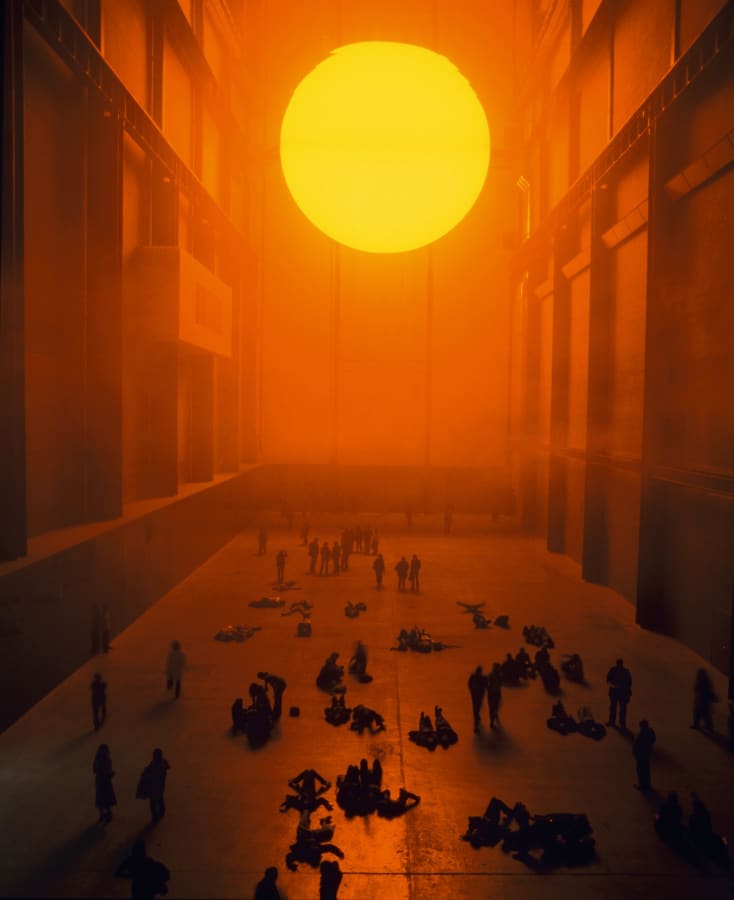
图 6 / Fig. 6. Olafur Eliasson, The Weather Project, 2003, Tate Modern 展览现场 / installation view. 图源 / Source: Studio Olafur Eliasson.
I dislike the word trauma, partly because its liberal overuse has made it too easy. Still, Lyotard’s formulation helps: the first impact comes too soon, the second always too late. Something remains split between event and understanding. It can only be taken in through witnessing, through bearing the heaviness before translating it into discourse.
Is it fair, then, to say that there is less anger coming from Chinese people? Of course that is wrong. People everywhere feel anger. The real question is how, in a given culture, that energy forms and how it is digested. Here Hui’s term hua, transformation, becomes useful. In the aesthetic field I am trying to describe, anger often avoids the shape of direct opposition. It is transformed, absorbed, made ambient, turned into enduring sadness, or held in the restrained condition Hui associates with blandness, where emotion does not discharge theatrically.
This is only a provisional account. It aims to avoid fixing what either side essentially is. These observations are historical and situated. They may be true only at this moment, from this angle, from inside this gap. At another time, or from another position, they may fail completely.
中文
我已经很久没有在大陆这样认真地看一个展览了。也许真的太久了,已经十多年。再次回到 798,走进一个白盒子,我想起刚搬到纽约时的自己:那最初几年里做的作品,还没有转向后来那种更容易被纽约艺术系统听懂的语言。那个转向有外部压力,也有我兴趣本身的变化。可是更早的那种声调,一直在我身体里更真实。它在纽约很难翻译,于是我暂时把它搁下了。
2015 或 2016 年以前那个做作品的我,仍然很深地陷在中国里。很多年后,重新在现场听见这种旧频率,感觉有点奇怪,也有点好笑:这像一个老套却真实的故事,一个人在另一种文化里生活久了,再回到所谓故乡,难免会带着一双半熟不熟的眼睛重新看它。
引发这些想法的展览,是张尕策划的《Kairos Resounding》,798CUBE 正在展出的 Julian Charrière 与 Laurent Grasso 双个展。两位艺术家分别有法国-瑞士和法国背景,作品却在中国的机构空间里出现,由中国策展人组织,并被放进中国当代艺术的语境中。正是这种放置,让某种声调重新变得清楚:时间慢下来,声音趋向环境和空灵,主题常常巨大、非个人,也不太容易被一句话说完。
我在一些有幸认识的朋友和熟人的作品里也感到过这种东西,比如贺子珂的影像,程新皓带有田野和纪录气质的摄影与影片。在更知名一些的艺术家里,曹斐也让我有这种感觉。它们常常有奇怪、异常、甚至不正常的东西进入画面,但语气仍然悬着,绕着走,很冷静。我在纽约见到的一些中国艺术家的作品里也感到过它,比如何卉奇关于云与雾的影像,黄安澜进入 2024 年惠特尼双年展的影像作品。只把这些艺术家称作“移民”,似乎就抹平了一些东西——他们身上某种近乎“根”的东西,他们如何守着它,又如何一次次与它重逢。“根”这个词用在这里并不妥帖,但我一时也找不到更顺手的说法。
图 2 / Fig. 2. 左上 / top left: 程新皓《叠层与漂砾》; 右上 / top right: Yasmine Anlan Huang, Her Love is a Bleeding Tank; 左下 / bottom left: Huiqi He / 何卉奇作品/项目静帧; 右下 / bottom right: 贺子珂《Random Access》。图源 / Sources: artist website, Whitney Museum, Kontekst Collective, 2025 Taipei Biennial.
这里我必须先说,我并不是很想把问题放在“当代艺术”里,或者把“艺术”当作“别人的职业”来谈。一旦这样设定,99% 的人已经会觉得自己被排除在外。艺术归根到底关乎被制作出来的物,关乎 crafted artifacts,关乎 made things。制作这件事,其实每个人都在做。真正让我在意的是当下中国的气氛:某种态度,某种看世界、看存在的方式。艺术是进入这个分析的入口。这样的分析总要从行为或物件开始。如果从行为入手,就很难绕开数据化的滤镜;而从物件,从那些被做出来的东西入手,反而是一个更好的启发式路径。
这种大陆的忧郁声调到底是什么?
所以问题变成:这种大陆的忧郁声调到底是什么? 它和我后来在纽约学会使用的声调之间,彼此照出了什么?我不想给中国当代艺术下一个本质定义,那样太快,也太老套。我更想问:一种感性是怎么形成的;它训练人怎样看;它带着哪些历史;它让作品面对什么样的主体。
《Kairos Resounding》的墙文提到 kairos,也就是古希腊语里的“决定性时刻”,同时提到本雅明的 Jetztzeit,或“当下时间”,以及阿甘本的弥赛亚时间。它谈的是一种时间——被气候危机、加速的计算、前现代宇宙论与超人类的行动力一同挤压而成。语言很大,尺度也很大。它要观众通过冰川、大气、数据、宇宙时间和行星变化来思考。
这一点很说明问题:题材很大,展览也选择用这个尺度把自己说出来。在 Charrière 的作品里,时间常常变成地质的、冰川的、矿物的;在 Grasso 的作品里,感知被悬在科学仪器、神秘装置、历史绘画和 speculative fiction 之间。它们谈的是深时、被改变的知识、行星焦虑,以及人在更大系统里所占的那一点点位置。
图 3 / Fig. 3. Julian Charrière, The Blue Fossil Entropic Stories I, 2013. 798CUBE 展览现场/文献图,2026 年 6 月。Installation/documentation view at 798CUBE, June 2026. Photo: the author.
我没有资格断言中国当代艺术是什么,更不用说把它和纽约作一个完整对照。我甚至不确定“纽约艺术”是不是一个能稳定成立的说法。可是,当它和许多中国艺术家的作品放在一起看时,我们还是能临时指认出一种“这里的艺术”。每个场域都很杂,也都希望自己被说成很杂。即便如此,每个场域也都有自己偏爱的声音和题目。纽约有,北京有,柏林和伦敦也有。
大陆当代艺术常常转向文明和时代这样的尺度。它们既是题目,也是审美声调。
我暂时的感觉是,大陆当代艺术常常转向文明和时代这样的尺度。它们既是题目,也是审美声调。 它们也许说明的不是作品本身,而是作品周围的社会结构。问题在于,为什么这里的艺术这么常朝那个尺度走。
说大陆文化天生更关心大问题,当然不对。美国人同样迷恋历史、灾难、技术、自然和未来。差别在于如何处理、如何表达这些问题,以及它们与艺术家、策展人、观众、公共性、机构之间如何发生关系。除去一些很具体的地区议题,比如西方语境里的种族或性,很多压力其实到处都在。只是它们被编织起来的方式不同。
到这里,我可能还没有真正回答自己的问题。我想说的是,这里有一种不同的注意力方向。它几乎出现在生产的每一个环节:在概念里,什么值得关心,为什么值得关心,问题的哪一部分变得可以去想;在形式里,什么态度合适,什么回应算有意义,什么强度值得信任。
观看的位置常常不属于某个清楚的个人,作品也不总是把某个个体观众当作终点。
在大陆声调里,观看的位置常常不属于某个清楚的个人,作品也不总是把某个个体观众当作终点。 不过,把美国艺术,或者纽约艺术,简单说成个人主义,也太便宜了。美国西南部的 land art,例如 Michael Heizer 的作品,也有另一种“小而巨大”的东西:缓慢、非人,关心身体尺度之外的时间。这里说的非人,和技术意义上的后人类不同,更像是把人的感觉深深推入某个现象之中,与其他现象并置。
图 5 / Fig. 5. Michael Heizer, City, 1970-2022. 图源 / Source: Triple Aught Foundation.
一种仿佛有时间坐下来观看世界的艺术,像午睡时,所有人都睡着了,它还在那里看。
大陆声调在这里变得尤其明显。甚至同一个艺术家的实践,在不同语境中出现,质地也会完全变掉。看某位艺术家在达拉斯展览的纪录影像,再回到北京看类似的问题,会明显感觉到差别:一个版本跳动、有电流感,另一个版本沉郁、缓慢。这又把问题带回我想描述的那种质量:一种仿佛有时间坐下来观看世界的艺术。像午睡时,所有人都睡着了,它还在那里看。那种存在的声音,在这里很具体。 顺便说一句,这也许是现象学在中国变得这么有吸引力的原因之一,除了政治和偶然因素之外。
把这一切解释成中国不能直接说政治,所以只能留下这种环境化的声音,也太容易了。如果真是这样,对抗会换一种形状出现。事实上它确实会出现。葛宇路的作品可以放在这里想。可是,把葛宇路的实践当成审查之下的政治行动,会很粗暴,甚至有点冒犯。 他的作品里同样有大陆声调,早期艾未未那些所谓政治艺术里也有。问题不只是冲突有没有出现,而是冲突如何变得可感。
把葛宇路的实践当成审查之下的政治行动,会很粗暴,甚至有点冒犯。
图 4 / Fig. 4. 葛宇路,GE YU LU, 2017。2019 爱知三年展展览现场。Installation view, Aichi Triennale 2019. Photo: Takeshi Hirabayashi. Source: Aichi Triennale.
到底是什么生产出这种沉重、缓慢、空灵、非人的艺术?
到底是什么生产出这种沉重、缓慢、空灵、非人的艺术? 它和那种带电的、对抗性的、情绪外放的、以人为中心的艺术之间,差别在哪里?
一种可能路径是哲学。道家提供了一种宇宙论:人在其中不占中心,事物更多通过转化显现,较少通过断裂出现。可是这条路也很容易走得太快。它可能滑向 François Jullien 常被批评的那种整齐对立:希腊形式在一边,中国过程在另一边。许煜对 Jullien 的阅读之所以有用,是因为它保留差异,又不让差异变成漫画。中国当然有对立,也有悲剧;现代史里充满暴力。更有意思的问题是,对立如何被另一种逻辑处理。
矛盾并不总是以英雄式断裂出现。它沉降、弥散、变厚、返回、转化。
因此,许煜关于悲剧逻辑与道家或玄学逻辑的区分很有帮助。在悲剧模型中,矛盾趋向断裂与崇高。在道家模型中,按他通过有、无、玄所做的重构,对立保持在一种递归关系里。无超出有,也使有成为可能。玄命名的是一种运动:相反者彼此牵连,不急着被解决。它帮助我们描述这里讨论的大陆作品:矛盾并不总是以英雄式断裂出现。它沉降、弥散、变厚、返回、转化。
当然,这条路径也必须被怀疑。过去一百年的中国经历了外部入侵、内部政治动荡、意识形态暴力、经济灾难、重建、迁徙和加速。可是艺术里经常缺少美国艺术中常见的视觉呼喊和热度。即使在 1989 一代艺术家那里,按理说我们会期待更直接的表达,却常常仍有一种奇异的诙谐。它背后是怎样的历史心理?这种艺术又在养成什么样的感性?
另一种可能与语言有关。也许许多中国人对语言和话语有一种深层的不信任。“不信任”这个词也不完全准确,因为它听起来像失望。
真相会沉到某个语言钉不住的秩序里。交流于是带有游荡的性质。
更接近的说法也许是:人们相信真相会沉到某个语言钉不住的秩序里。那个秩序只能被绕着走、慢慢靠近、用手指一下,甚至通过错过来靠近。于是交流带有游荡的性质。没有打中目标,也成为接近目标的一部分。
当然,这类文明性概括必须非常小心。任何地区的艺术内部都足够复杂。北京、湖南、广东、台湾、香港、日本、韩国的作品都会以不同方式让这个图像变复杂。如果前面的分析还有价值,它应该能在这些差异里被检验,也应该在差异里变得更精确。我的经验不足以在这里完成那项工作。我只能说,从我自己处在纽约与大陆之间的缝隙里看,我确实感到某种共同特征。
这种声调也可能与人们如何处理发生在自己身上的事情有关。在西方,一种熟悉的处理方式是直接说出来:谈话治疗、忏悔、把经验转成语言。在我试图描述的大陆美学里,处理过程更像溶解。某个东西溶进空处,再被自身下沉的重量带走。这也许解释了那种沉重。
如果作品只关心文明尺度、时代时间、外部性、深空和深史,却没有忧郁,它可能会像国家地理式影像:宏大的画面、气氛化的声音、被美化的星球。在艺术世界里,Olafur Eliasson 的《The Weather Project》提供了一个相邻的声调:巨大、气氛化、非个人。可是我想描述的沉郁感不同。它似乎和某种余震有关,和某个还没有被吸收的冲击有关。
图 6 / Fig. 6. Olafur Eliasson, The Weather Project, 2003, Tate Modern 展览现场 / installation view. 图源 / Source: Studio Olafur Eliasson.
我不太喜欢“创伤”这个词,部分原因是它在自由主义话语里被用得太顺手。但利奥塔的表述仍然有帮助:第一次冲击来得太早,第二次理解总是太晚。事件与理解之间留下裂缝。它只能先以见证去承受,去担起那份沉重,而不是立刻化成话语。
那么,能不能说中国人身上的愤怒比较少?当然不能。哪里的人都会愤怒。真正的问题是,在某种文化里,这股能量如何成形,又如何被消化。在这里,许煜使用的“化”变得有用。在我试图描述的美学场域里,愤怒常常避开直接对立的形状。它被转化、吸收、环境化,变成持久的悲伤,或者被保持在许煜所说的“淡”的状态里:情感不通过戏剧化的方式排出。
这只是一个暂时的说法。它试图避免把任何一边固定为本质。这些观察是历史性的、位置性的,也许只在此刻、从这个角度、在这条缝隙里成立。换一个时间,换一个位置,它们可能完全失效。
图片与资料来源
- Sies + Höke,《Kairos Resounding》展览页:https://www.sieshoeke.com/exhibitions/julian-charriere-kairos-resounding—duo-exhibition-with-laurent-grasso
- 程新皓,《Stratums and Erratics》项目页:https://www.chengxinhao.me/stratums-and-erratics-general
- Whitney Museum,Yasmine Anlan Huang 页面:https://whitney.org/exhibitions/2024-biennial/art?section=21
- Kontekst Collective,Huiqi He 页面:https://www.kontekstcollective.com/huiqihe
- 2025 台北双年展,He Zike 页面:https://www.taipeibiennial.org/2025/content/He_Zike
- Aichi Triennale 2019,GE Yulu 页面:https://aichitriennale2010-2019.jp/en/artwork/S05.html
- Triple Aught Foundation,Michael Heizer《City》:https://tripleaughtfoundation.org/
- Studio Olafur Eliasson,《The Weather Project》:https://olafureliasson.net/exhibition/the-weather-project-2003/