Software as Worlding Infrastructure
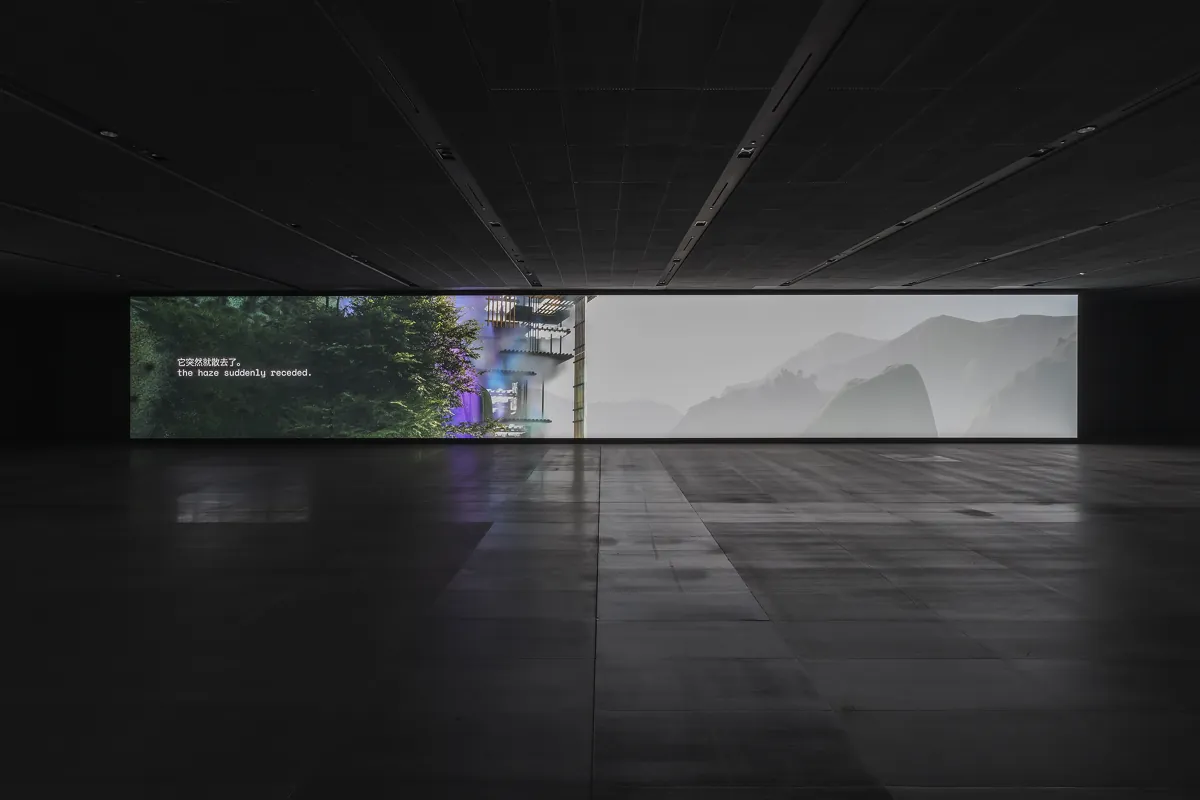
This manuscript was transcribed by a large language model from a lecture of the same title delivered at Duke Kunshan University on September 29, 2025. A closely related version was presented at Hong Kong Baptist University on September 24, 2025. I gratefully acknowledge the invitations from Prof. Ziv Ze’ev Cohen and Prof. Rui Hu (Duke Kunshan University) and from Prof. Kachi Chan (Hong Kong Baptist University).
The title is “Software as Worlding Infrastructure.” Before I start, I want to spend a bit of time explaining what the title even means. I think “software” and “infrastructure” are two terms that are pretty clear, but “worlding” is maybe a little opaque to some. The word “worlding” has its roots in philosophy, specifically phenomenology. In very reductive and overly simplistic terms, the title basically says that software—protocols, interfaces, code, algorithms—serves as a fundamental mediation for our reality.
To put it another way, software quietly influences and decides what is intelligible, what is visible, what is operational, and what is actionable within our reality. That’s why I call it the infrastructure of reality. And “worlding” is a process; it’s an action. It’s not just that software shapes the world statically; the process is dynamic, just like software itself. Software is a highly dynamic medium.
Software as a Medium
When we talk about computing or software as a medium, what exactly are we talking about? What does it mean for it to be a medium? And what’s the difference between software as a medium versus, say, photography, cinema, or paper—the older media?
I want to quickly fly through some of the milestone research on this topic. I’m assuming most of us here have heard of The Language of New Media by Lev Manovich, which is one of the defining texts for new media as a medium. When I say “new media” here—and I think for Manovich as well—it mostly means computer media, not news or public media. It’s referring to software, basically.
For Manovich, in his framework, he outlined five features of new media: it is numerical, it has modularity, variability, automation, and transcoding. This was a very sharp observation, and I think other scholars, even those with a critical view of his framework, more or less agreed. But multiple scholars responded not by saying Manovich was wrong, but rather that his view was insufficient.
One thread of response, for example from the scholar Tiziana Terranova, argued that it’s more important to talk about networks—nodes, networking, and relations. It’s not just about the internet, which is certainly one of the biggest networks, but also about the relations between different devices, and between software and the system. It’s about looking at the system as a whole rather than a single device. For her and this line of thinking, you can’t really talk about new media without talking about the network. The network and new media—or from now on, let’s just use the words software or computing—are essentially co-constituted. They constitute each other. In other words, software has always already been positioned within a network. This gives us a sense that when you study, work with, or create art with new media, you always have to be aware that it’s a node in a network, a part of a system. That’s a crucial point.
Another line of work, from the media theorist Alexander Galloway, is that Manovich spent too much time seeing media as an aesthetic object, analyzing its formal qualities like being numerical or variable. Galloway basically says that maybe we’re treating new media too much like film, which is more of an aesthetic experience you sit and watch. But for software, for a computer, the more important thing is that it affects things. Its essence is action. For Galloway, cinema has an ontology, but the computer is an ethic.
This is another important line of thought: to look at software through its effect, through how it mediates, through how it enacts different actions—making certain actions operational and others non-operational. It makes certain possibilities visible and others invisible, rendering some things convenient and others unreachable. I’m being very over-simplistic with these theories, but I think those are the general points of view. I don’t see them as contradicting each other; you don’t have to pick one. They all complement each other and complete the whole picture.
Four Lenses
To study and create with computing is different from making cinema or film. We’ve entered an age where, when you think about this kind of medium, you’re thinking less of a traditional medium like a CD player playing a film or a piece of music, and more like a diagram—a system, a network, a set of relations.
To summarize: to study and make projects with software (including game engines and web software) is to think about them through four lenses, with a bit of a hierarchy:
-
Cultural and Political Lens. When I say political, I don’t mean partisan politics, but political in the sense of power dynamics.
-
Ontological Lens. What exactly are these media? What is the essence of a social media platform?
-
Epistemological Lens. How do these interfaces and software shape how we learn and what we know? What kind of knowledge is made possible or impossible?
-
Phenomenological Lens. This is my favorite. It’s concerned with how this technology affects how the world is revealed to us. “How the world is revealed to us” means that, for phenomenologists, reality isn’t a static thing just sitting there. Rather, a bottle, for example, appears differently to every individual. We experience it differently. Technology plays a fundamental and vital role in revealing our reality to us and affecting our subjective and emotional experiences—even the meaning of life. There’s no way around talking about meaning when discussing technology.