Other Spring
2023–2024
Other Spring (OS) is a theory-fiction worldbuilding project.
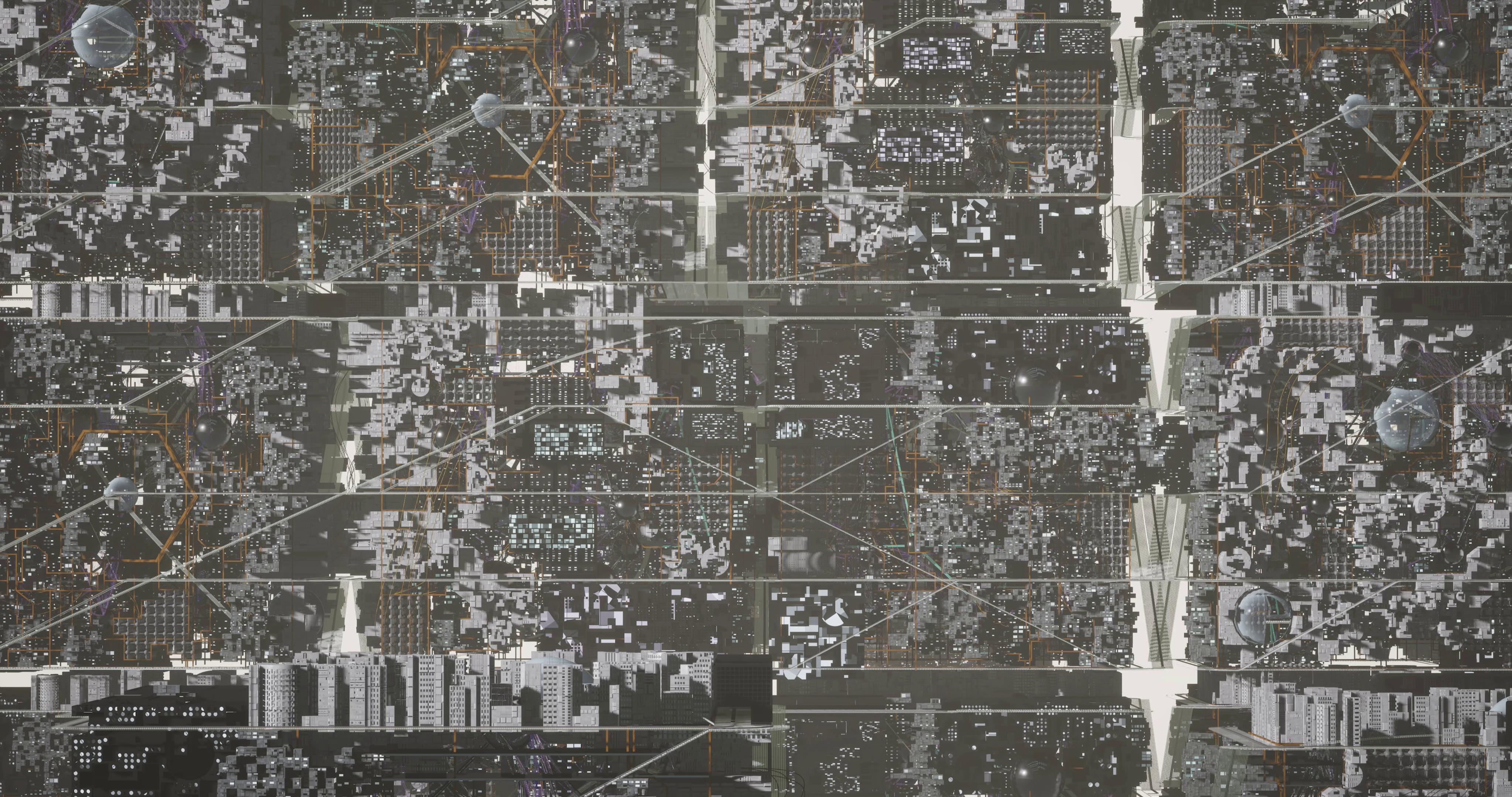
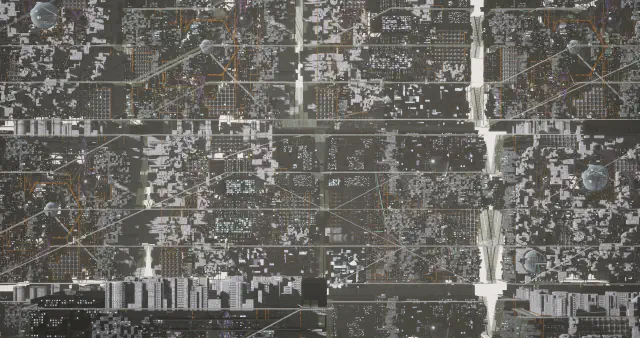
Film still: UNO
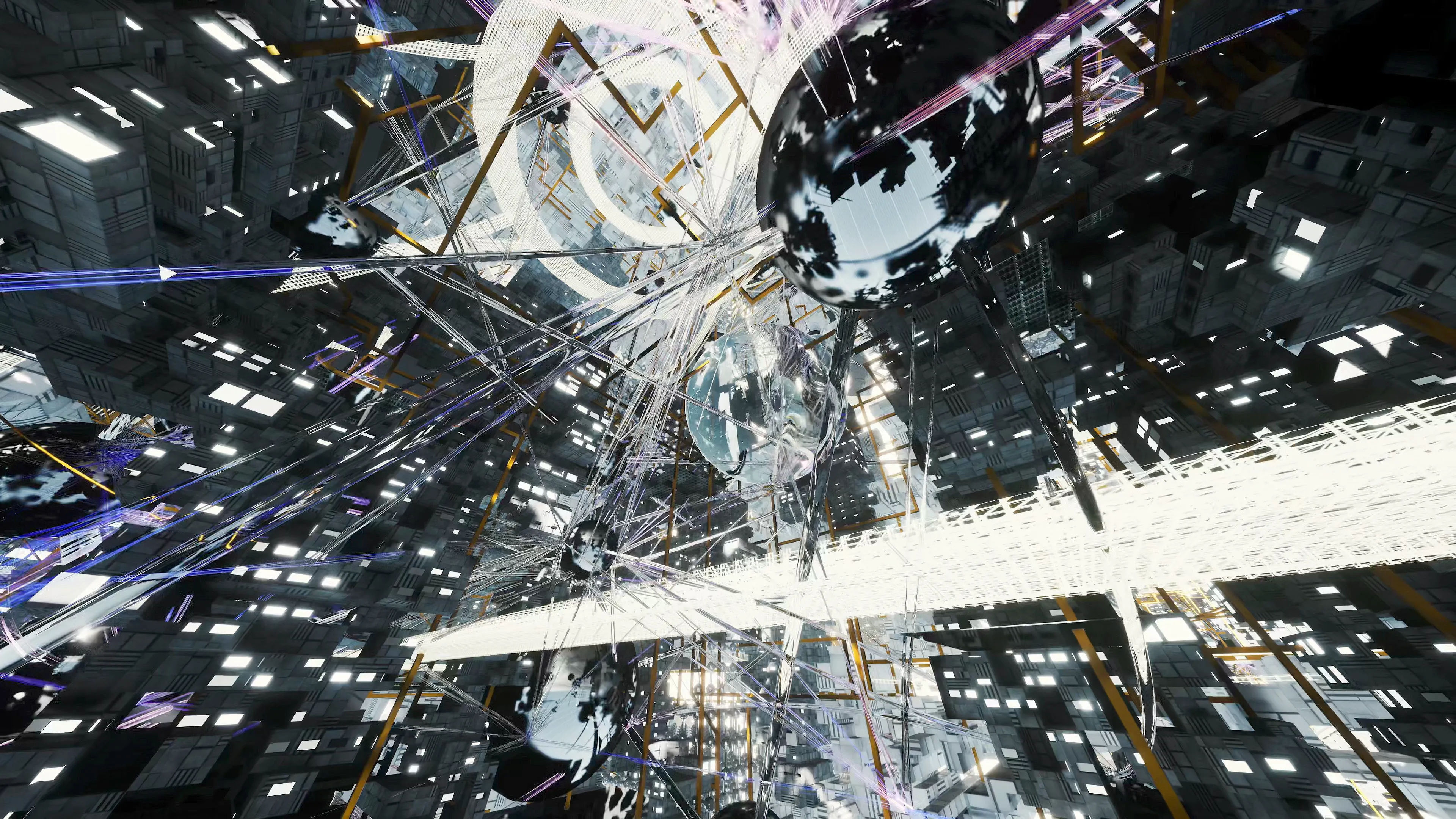
Film still: UNO’s observational center
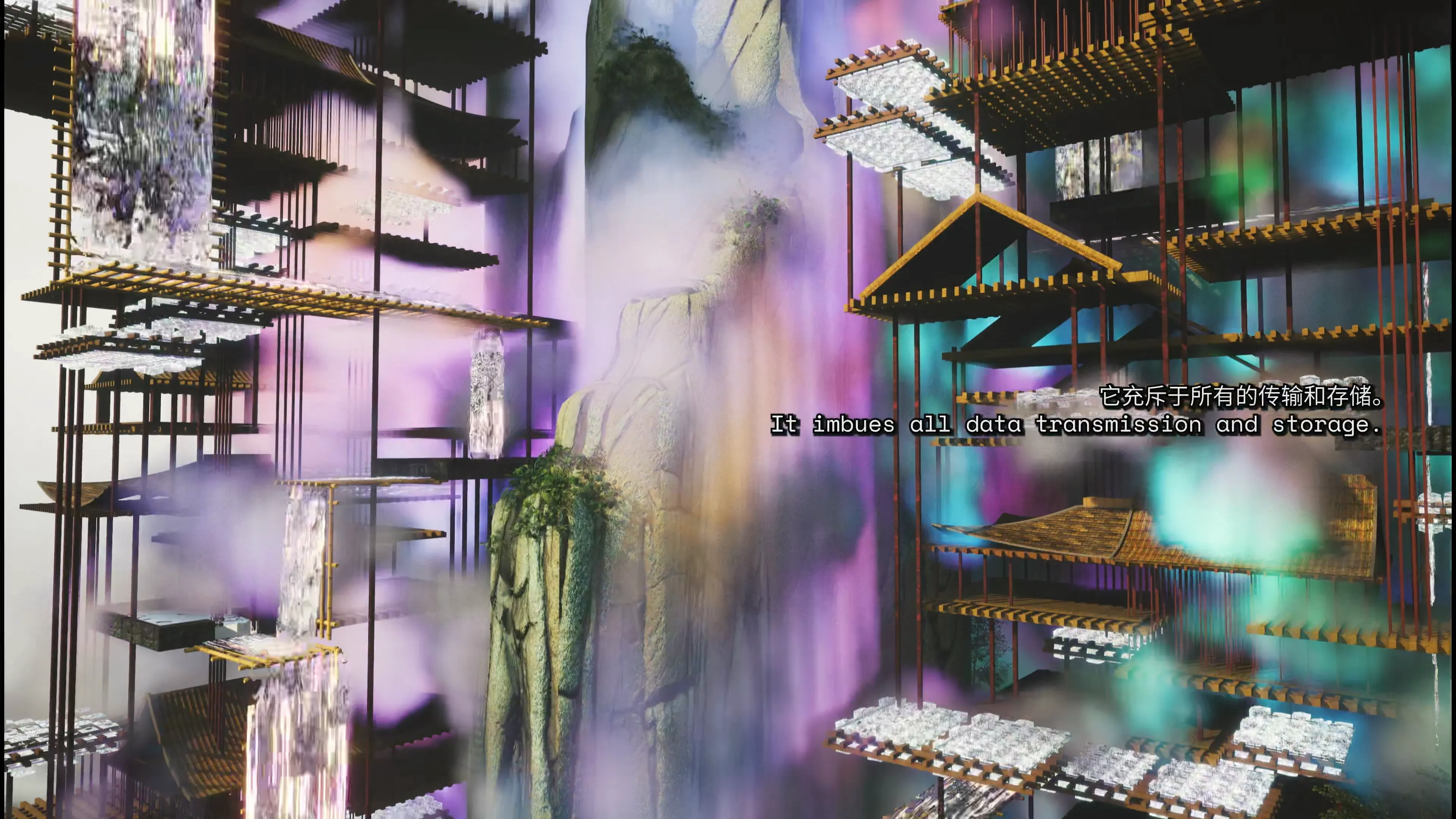
Film still: OS village
A village within an observing network
Other Spring (OS) is a speculative worldbuilding project presented as a docufiction. The OS world is designed through its technical infrastructure and architecture, then documented in film.
The project grew out of the research series Computational Haze and draws on the ancient tale of “The Peach Blossom Spring,” in which a secluded village remains sheltered from the surrounding world’s turmoil.
Other Spring brings the conditions of that seclusion into a technologically advanced near future: how could a village remain connected to a network while keeping its life from becoming fully legible to it?
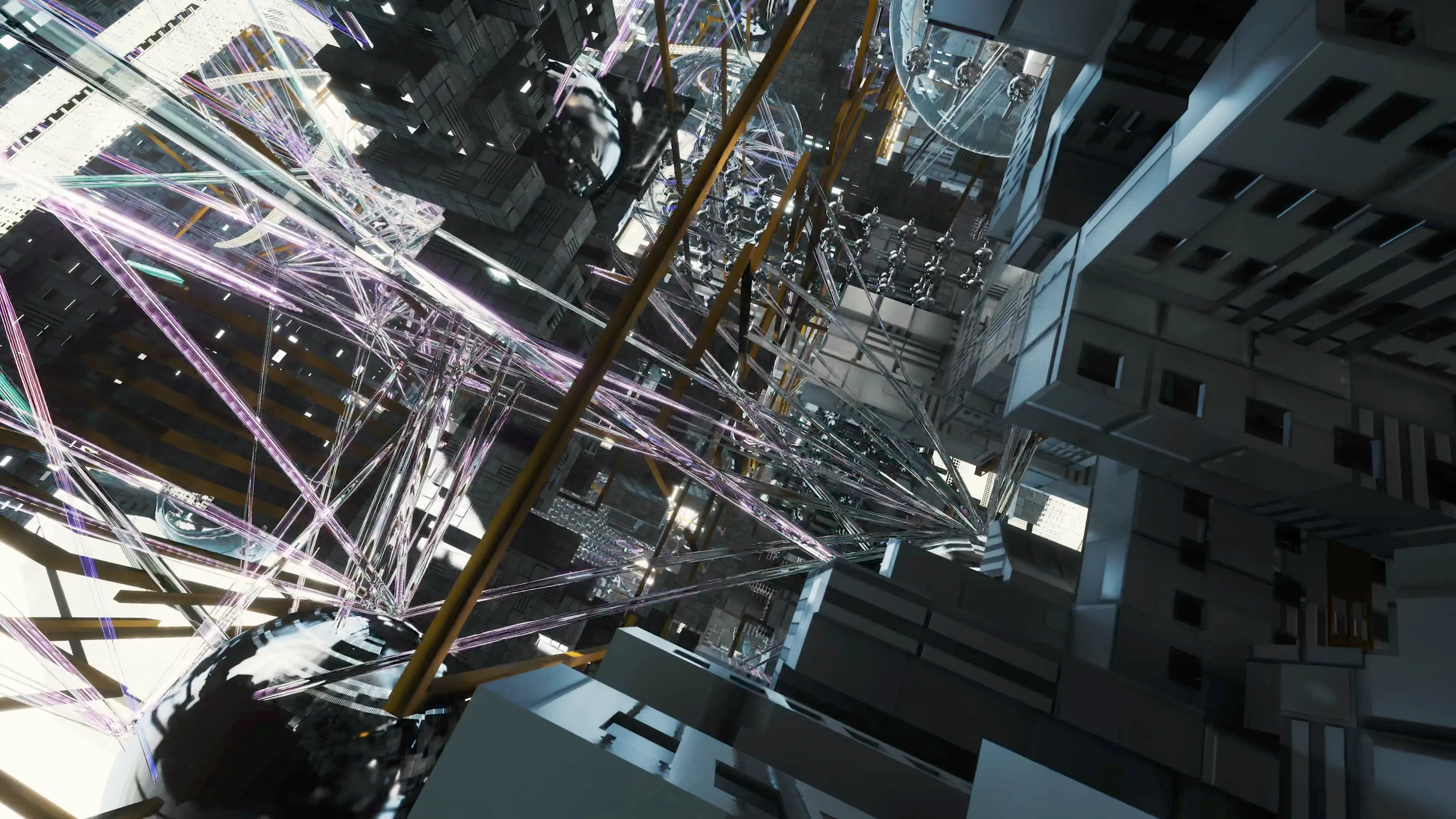
Film still: UNO’s data-transfer network
The film moves between UNO (Universal Network Observer), an AI-driven network organized around observation, prediction, and optimization, and the village of Other Spring. UNO extends a design philosophy in which the world becomes increasingly measurable and available for automated intervention. The village inhabits the same technological world through a different arrangement of its infrastructure.
HAZE is the village’s means of maintaining that difference. Conceived as middleware and protocols, it obscures the village’s activity while allowing communication with the wider network. Its forms appear throughout the landscape and buildings, from haze emitters to data falls. The village’s seclusion depends on these arrangements, which make room for ways of living that do not have to become transparent to UNO.
Opacity and agency within the network
Computation enters Other Spring as a condition through which a world becomes perceptible and governable. In UNO, observation feeds into decisions that alter the conditions of subsequent observation. The people using the network are also among the things it observes. This recursive relation extends the project’s concern beyond automated control of particular tasks: interfaces and protocols participate in shaping the norms by which behavior is understood and the range of actions that becomes possible.
The village’s opacity is a technical and spatial condition that must be sustained within this network. The research draws on obfuscation and differential privacy to imagine how information could pass between the village and UNO without making the village’s internal life fully available for analysis. HAZE gives this relation an architectural form. Its visibility in the film makes the infrastructure of concealment part of the world that can be encountered and examined.
Agency consequently depends on how observation and communication are arranged. The village needs the ability to set the terms of its connection to the outside, including what remains undisclosed. Its inhabitants’ capacity for quiet thought and autonomous decisions has collective conditions: the infrastructure mediating their relations must allow those activities to persist. The question of privacy therefore extends into the organization of a shared environment and the forms of life that its technical arrangements can accommodate.
This also bears on the project’s concern with functional equivalence and replacement. When people, things, and relations are understood primarily through measurable functions, what falls outside those functions can disappear from consideration. Computational Haze asks how to retain a place for the unknown and the uncomputable, including a distinction between what cannot be quantified and what should not be subjected to quantification. The village’s design holds these questions open through decisions about what its infrastructure captures, transmits, and obscures.
The two societies place different technological orientations within one fictional world. Their differences concern the purposes and values embodied in systems built from related technical possibilities. This is the project’s approach to technodiversity: considering how computational infrastructures might sustain different relations among people and their environments. Drawing on “The Peach Blossom Spring” situates that inquiry in an East Asian account of seclusion and coexistence, where remaining unknown is a condition of a community’s continued life.
Worldbuilding through technical and architectural research
The worldbuilding developed through media theory, cryptography, network engineering, and architectural research. Conversations with cryptography consultants informed the speculative protocols; work with architects gave those protocols spatial consequences in buildings, infrastructure, and the village’s relation to its surroundings. Designing the world made it possible to examine how a technical premise would affect the conditions of everyday life. The film documents this constructed world, while the architectural drawings expose more of its organization.
The research essay Let the Haze in From All Bounds develops the project’s questions of mediation, opacity, and computational reduction.
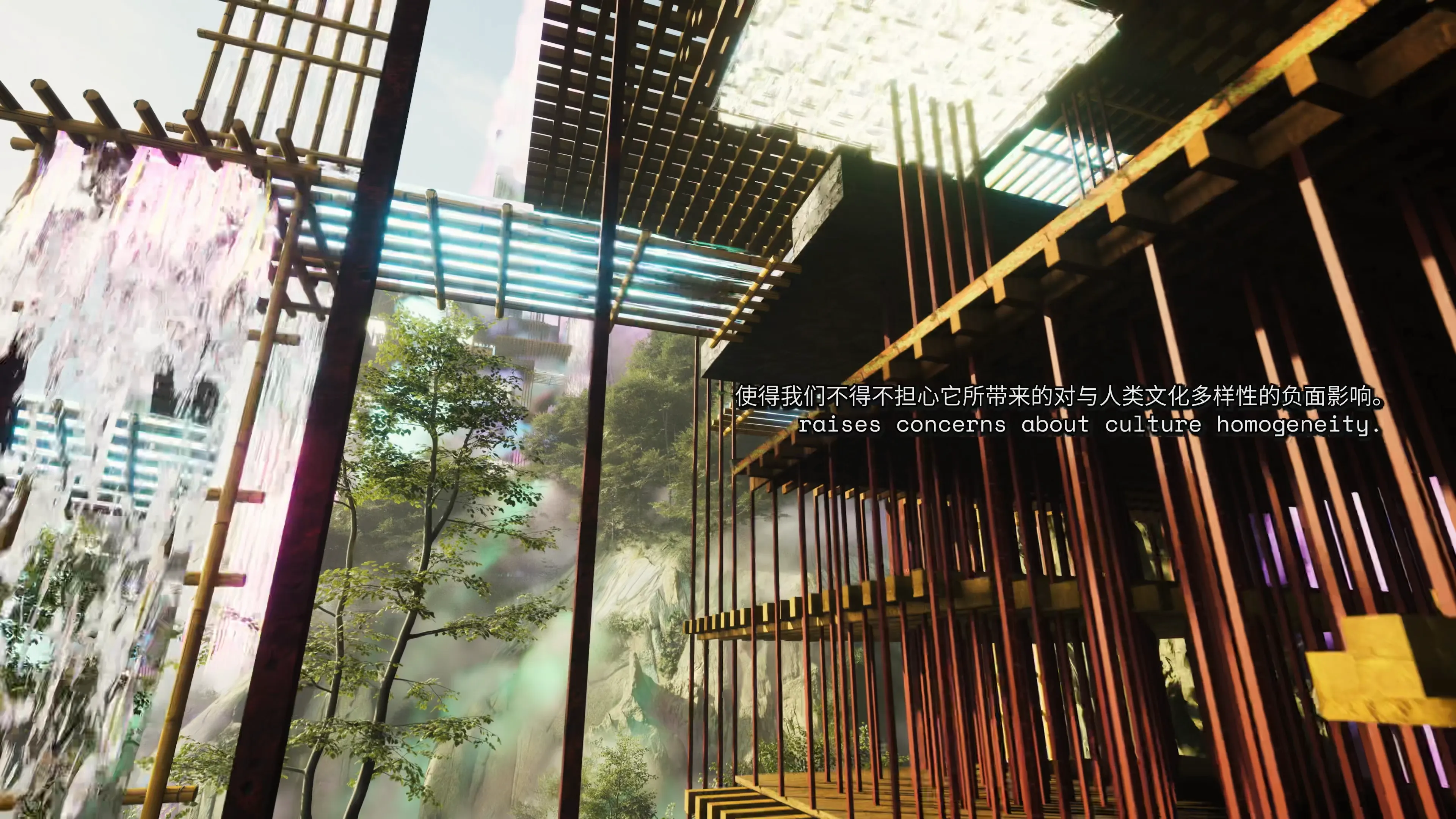
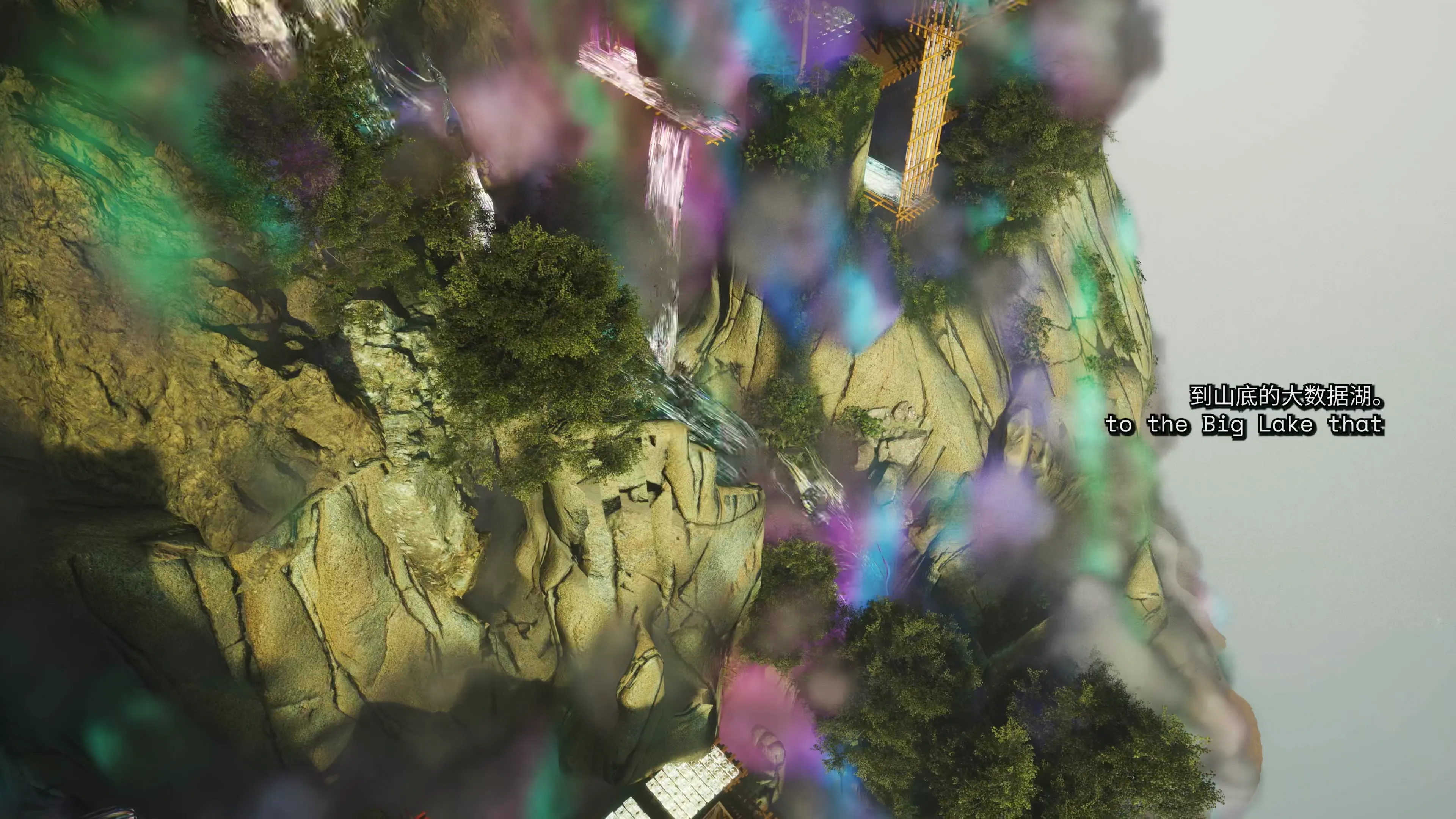
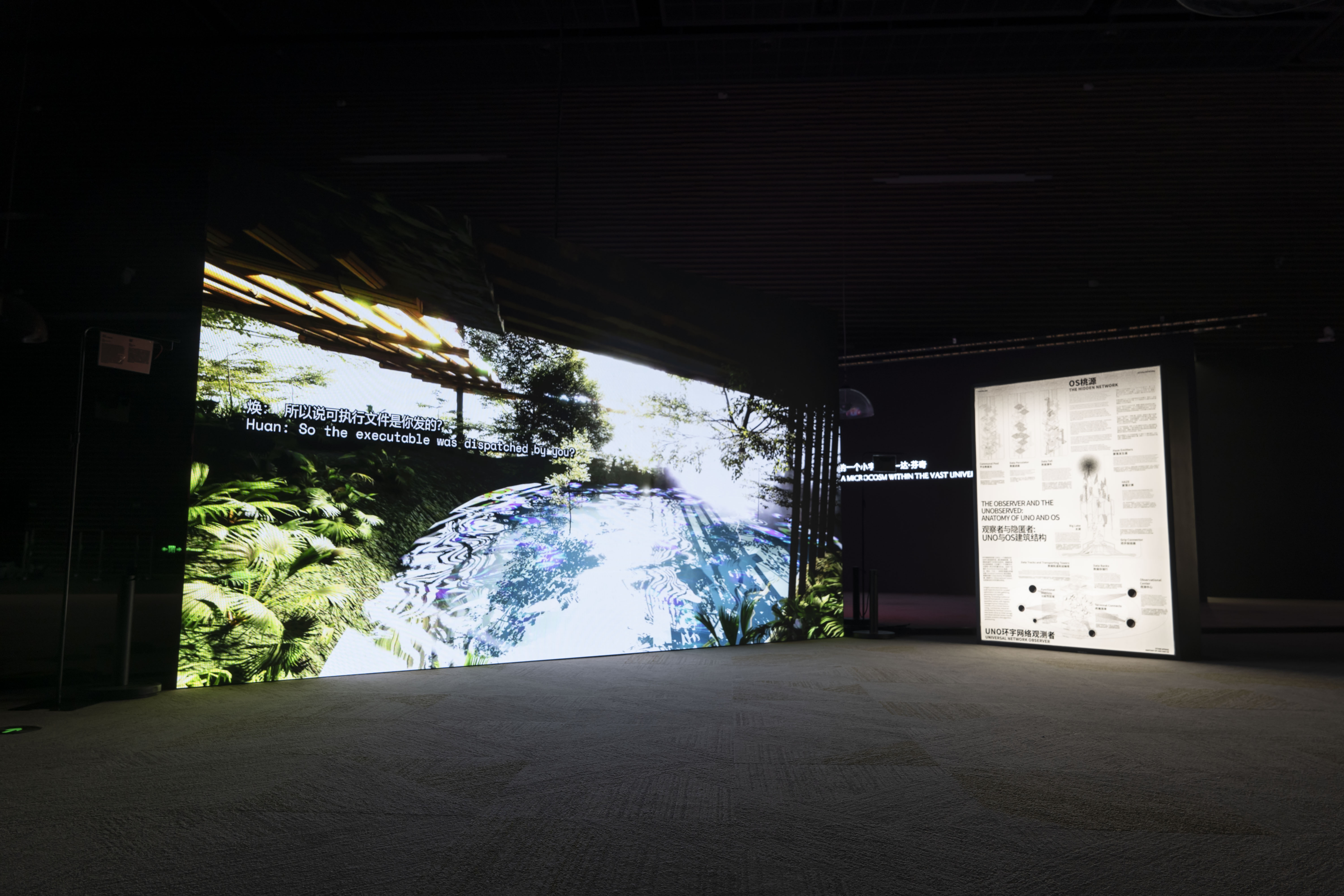
Other Spring shown at the exhibition “The Interface Between Humanity and the Universe 3.0” in Shanghai, China.
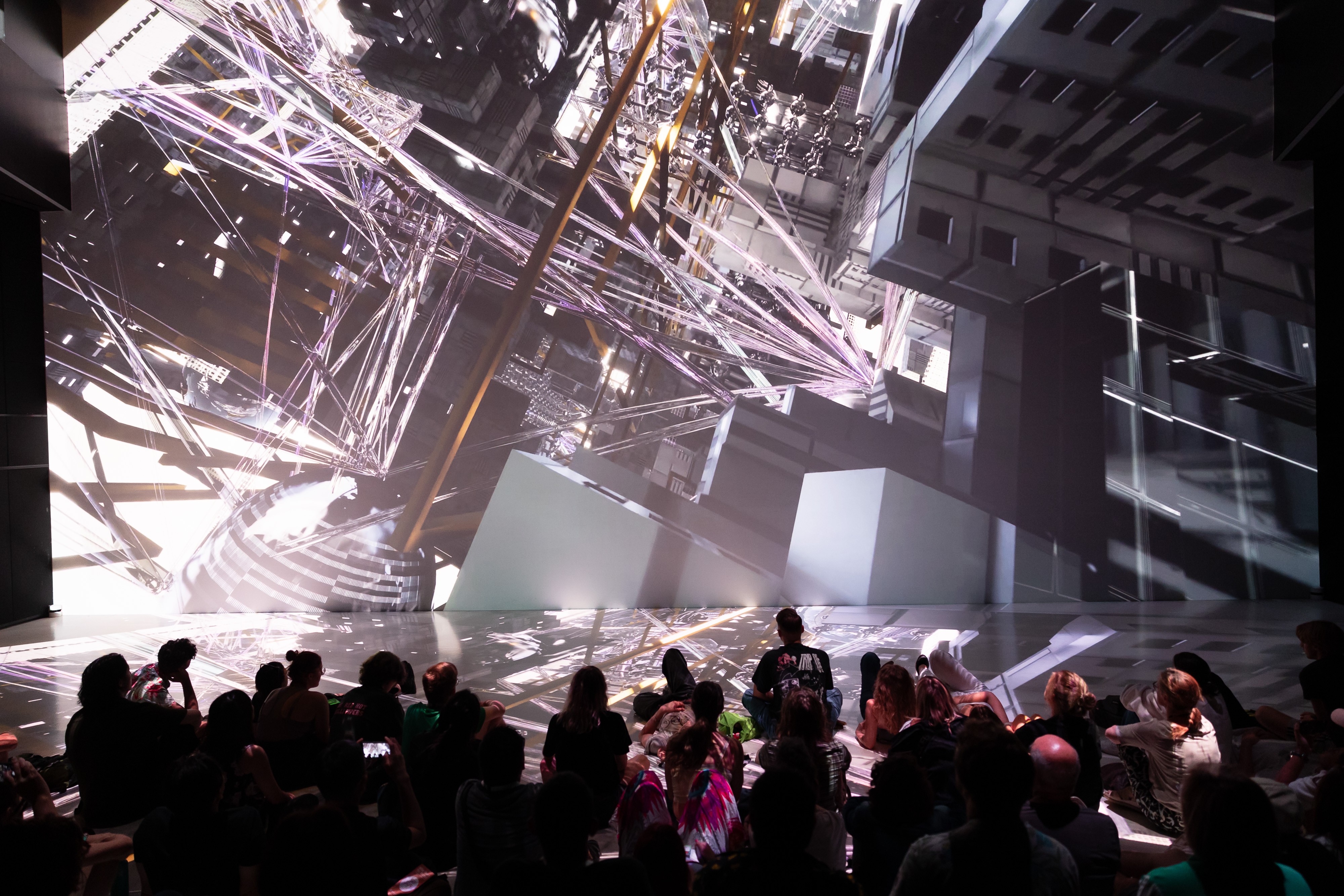
Other Spring at Deep Space 8K, Ars Electronica, Linz, Austria, 2023. Photo: Martin Hieslmair.
Architectural drawings of UNO and the village
The project involved an extended period of research into the architectural design and technological feasibility of the proposed world. Many images and presentation decks were prepared.
Below are some of the architectural blueprints we created to present the final designs of the worlds in OS.
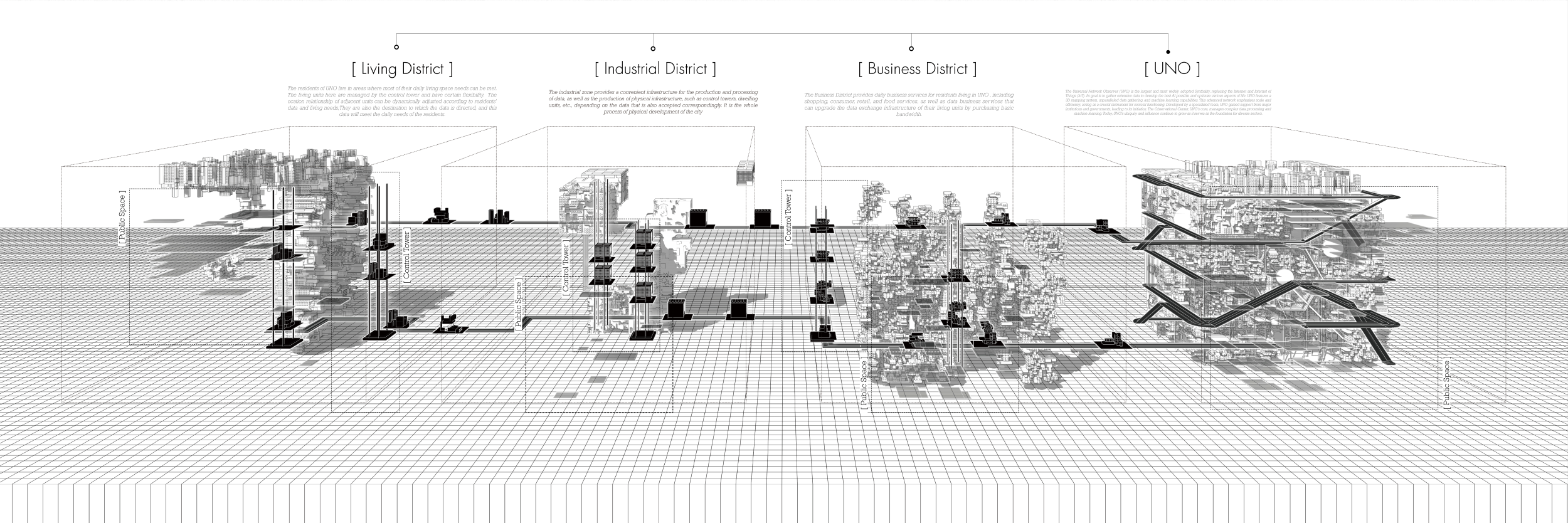
Architectural drawing: UNO’s structure
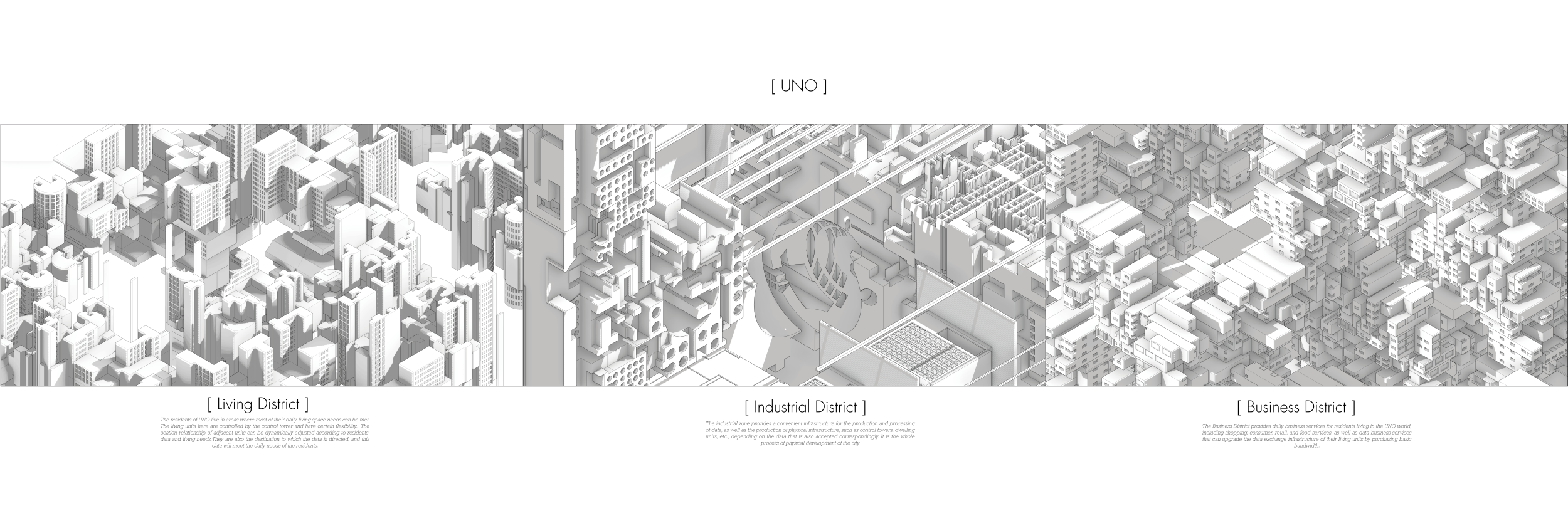
Architectural drawing: UNO’s three types of functional districts
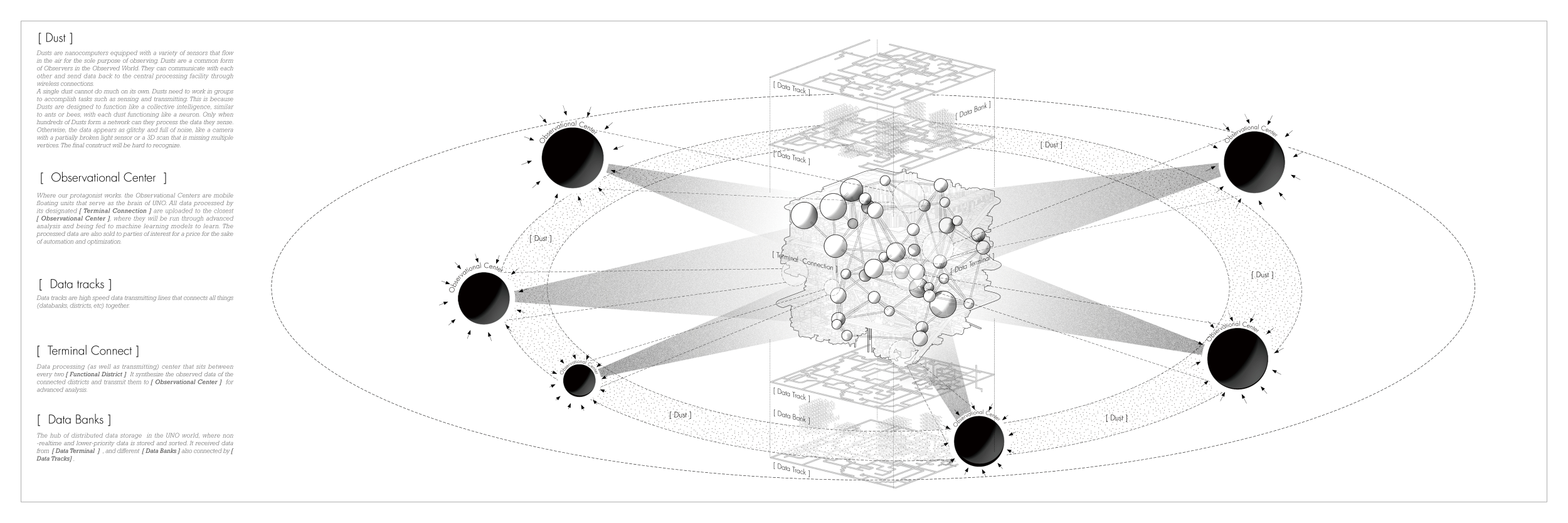
Infrastructure of UNO’s observational network
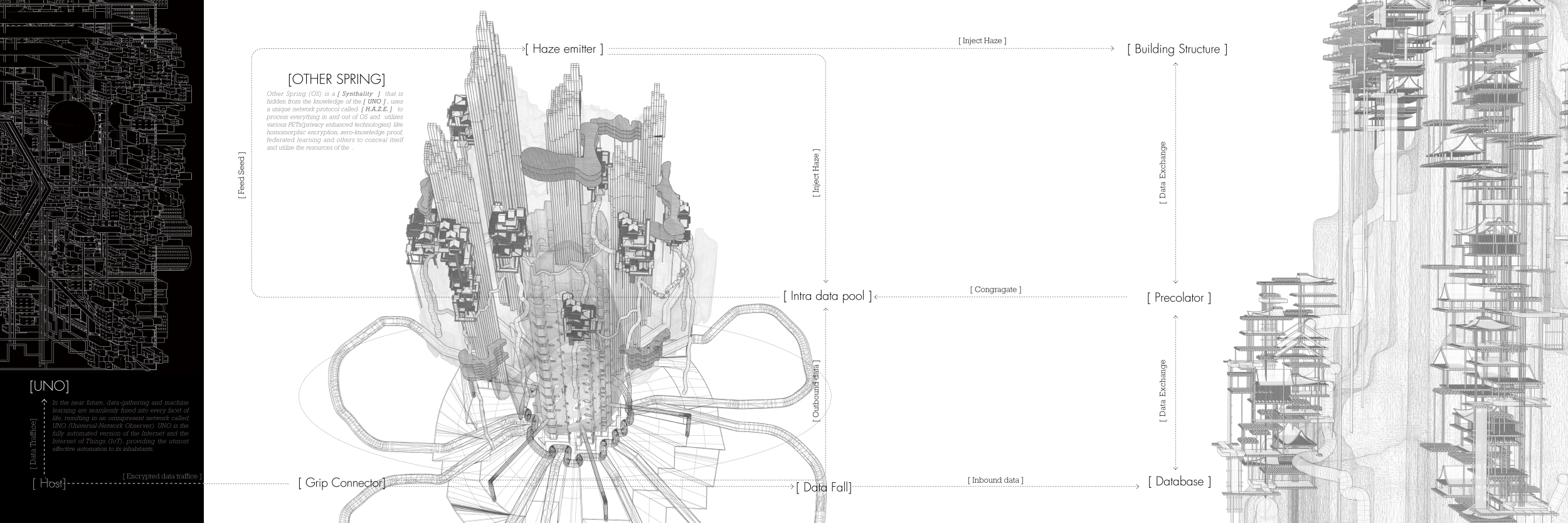
Architecture and inner workings of the hidden village 桃源
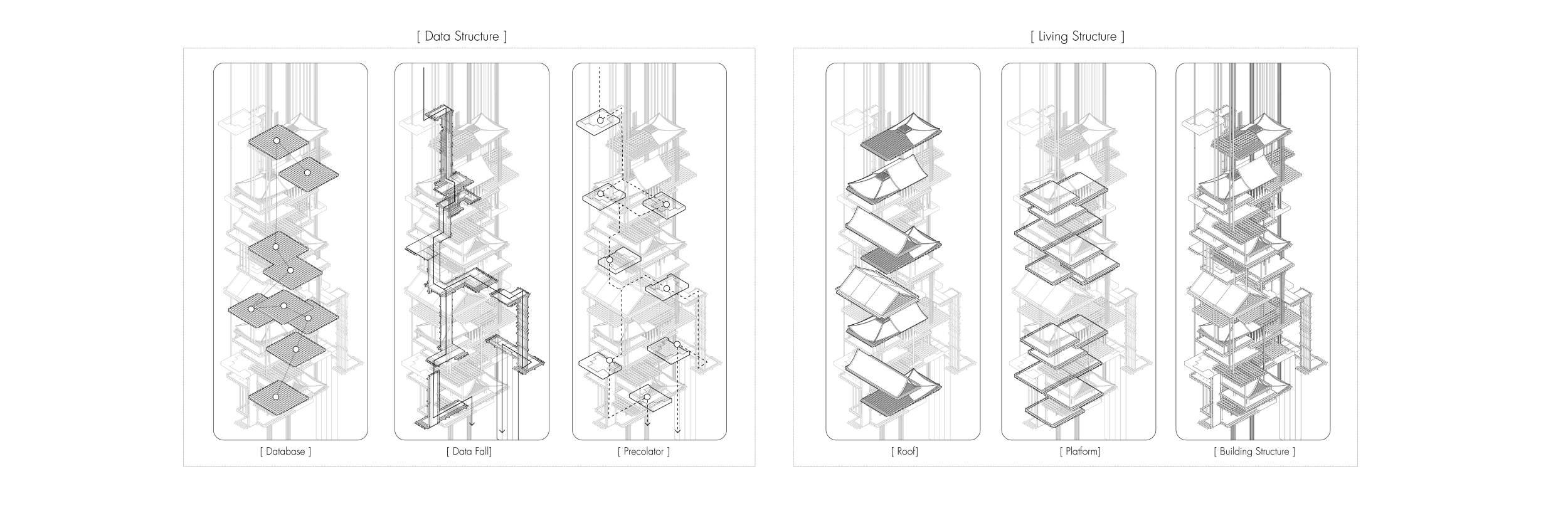
HAZE infrastructure in the hidden village 桃源’s buildings
Credits
Team
Created by zzyw (Zhenzhen Qi and Yang Wang)
Production team:
- Creative Producer: Matthew Doyle
- Research Architect: Junling Zhuang
- Worldmaking Architect: Mehrdad Ranjbar
- UE5 Technical Art Generalist: Cecil Boey
- Graphic Design / Film Editor: Qinru Zhang
- Music Composer: Maxwell Sterling
Consultants:
- Qifan Pu, Ph.D. (Consultancy on Cryptography)
- Kevin Chen, Ph.D. (Consultancy on Cryptography)
- Hanwen Zhang (Guest Critic)
- Huiqi He (Consultancy on Cinematography)
- Yuehao Jiang (Guest Critic)
Exhibition History
- 2025 City Campus Art Museum, Guangzhou Academy of Fine Arts, Guangzhou, China
- 2025 PARC 杭州, Hangzhou, China
- 2024 HOW Art Museum, Shanghai, China
- 2024 Hanart TZ Gallery, Hong Kong SAR
- 2024 Today Art Museum, Beijing, China
- 2024 HEK (Haus der Elektronischen Künste), Basel, Switzerland
- 2024 Museum MACAN (Modern and Contemporary Art in Nusantara), Jakarta, Indonesia
- 2024 Objectifs, Singapore
- 2023 China Academy of Art, Shanghai, China
- 2023 Ars Electronica, Linz, Austria
- 2023 Elektra Virtual Museum, Montreal, Canada
- 2023 HMG, Yongin, South Korea
Support
The project was sponsored by Hyundai Motor’s 5th VH Award and premiered on May 2, 2023.
Essays, interviews, and talks
- Let the Haze in From All Bounds — zzyw, 2024. Research essay on computational mediation, opacity, and the unknown, published in English and Chinese.
- Q&A with Dawn Chan and the 5th VH AWARD Finalists, Part 2 — Hyundai Artlab, 2023. The zzyw interview discusses the village’s concealment, its continued connection to UNO, and the design of HAZE.
- With ZZYW — Eyebeam, 2024. Interview on the research behind Other Spring and the use of noise to preserve privacy within a connected system.
- Networked Worlds — co—matter and WeTransfer, 2024. The Other Spring entry and interview discuss worldbuilding, autonomy, and the village’s relation to its environment. PDF, pp. 27–28.
- Software as Worlding Infrastructure — Yang Wang, 2025. Published introductory excerpt from a talk on software’s role in shaping perception, knowledge, and action.